Block, lot and slab — what the terms mean
Natural stone has its own vocabulary, and it's worth knowing before you start comparing options. A block is the raw piece of stone cut directly from the quarry — often weighing several tonnes. That block gets sliced into a series of slabs, the large flat sheets you'll see standing in a showroom, which are later cut down to the specific pieces used in your project.
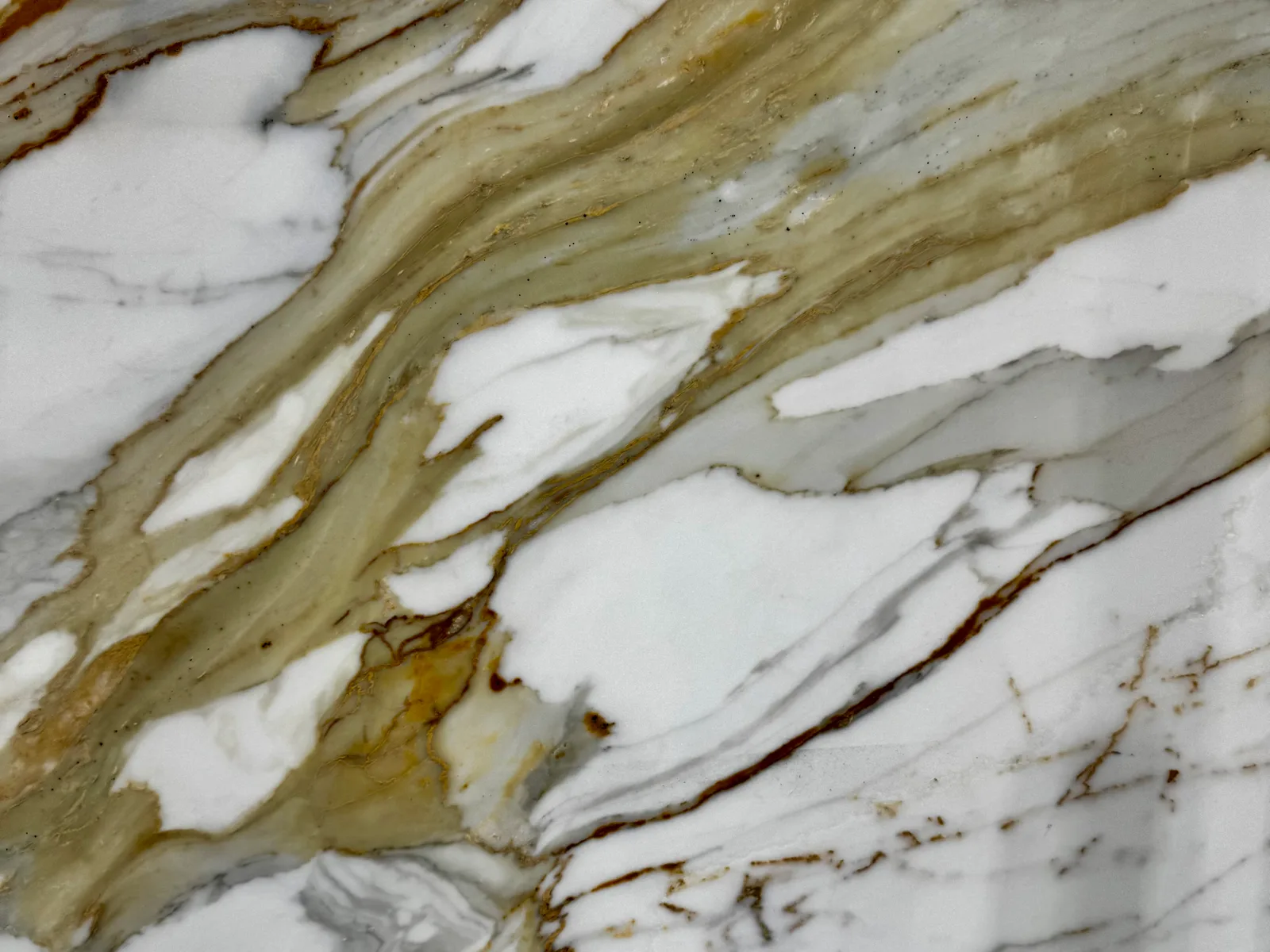
A lot generally refers to a group of slabs cut from the same block. Because they came from the same piece of stone, slabs within a lot tend to share closely matching colour, veining and character — while a different lot of the very same stone type, cut from a different block, can look noticeably different. This is exactly why two people can buy "the same" stone and end up with quite different results, and why we always recommend viewing your actual slab in person rather than relying on a stone's name alone.
What affects price
Natural stone pricing isn't arbitrary — a handful of genuine factors drive it. Rarity is the biggest: a widely quarried granite will typically cost less than a rare Brazilian quartzite with dramatic, hard-to-find veining. Origin matters too, since some quarries simply produce more distinctive stone than others, and the logistics of sourcing and transporting a block from a remote quarry add to the cost of what reaches the showroom floor.
Beyond the stone itself, slab size, thickness and finish all play a role — a polished finish on a large, thick slab generally costs more to produce than a smaller, thinner, honed piece. If budget is a firm constraint, it's worth saying so early; there's genuine variety across price points, and a good supplier will help you find something that delivers real character within your range, rather than pushing you toward whatever's most expensive.
Visiting the gallery
Photography — including everything in our own online gallery — can only tell you so much. Scale, depth of colour, and the way veining actually moves across a slab are things you genuinely need to see in person to judge properly. A few things are worth bringing along to make the most of a gallery visit:
- Cabinet, paint or tile samples — seeing your stone choice against the other finishes in the room makes a real difference
- Measurements of the space you're filling, to help narrow down realistic options on both size and budget
- A budget in mind — having a number ready helps us point you toward genuinely suitable options quickly
- Your phone or a camera — useful for comparing slabs side by side once you've seen a few that catch your eye
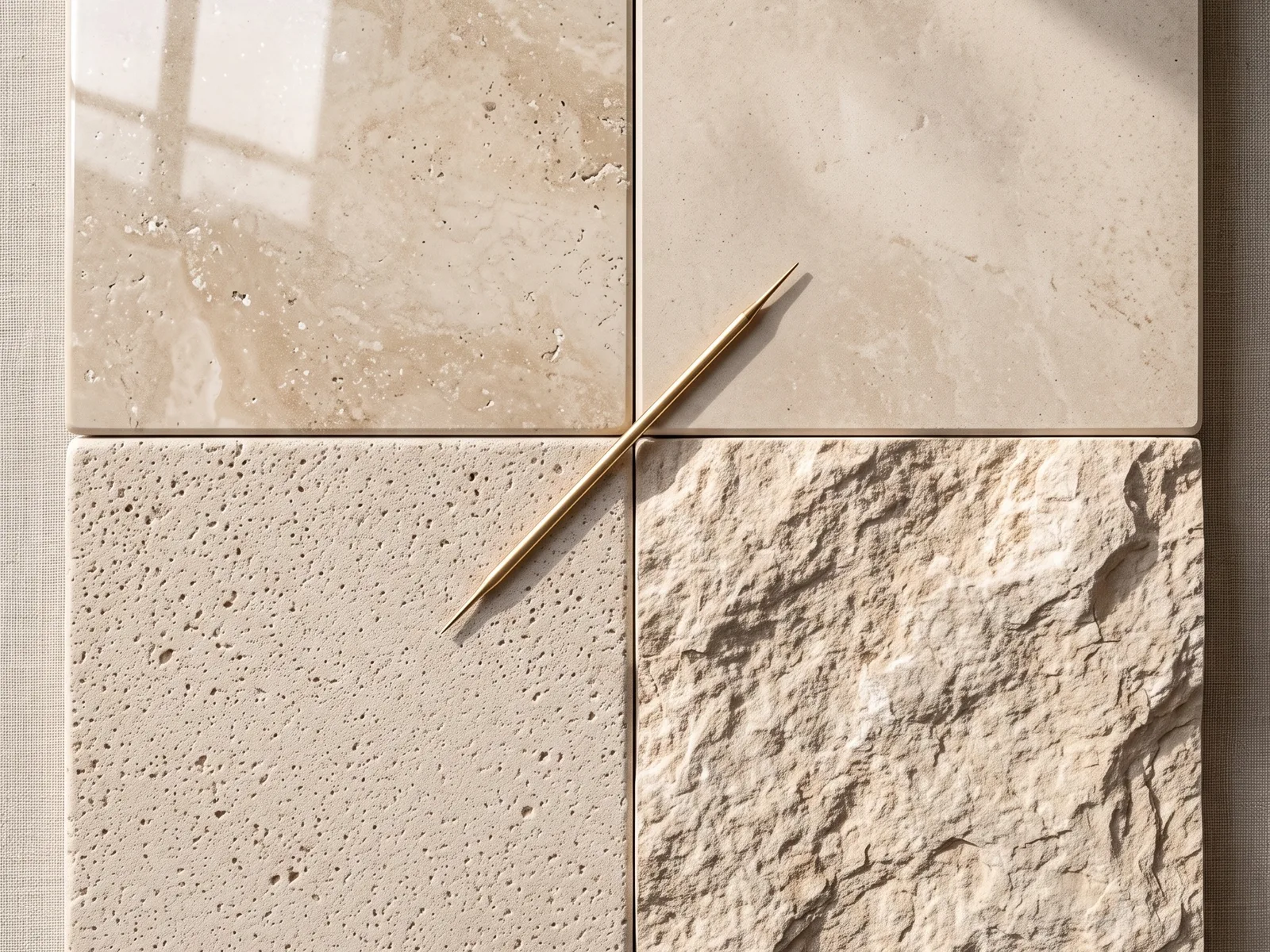
It's also worth knowing that a sample chip is genuinely useful for comparing against other finishes at home, but shouldn't be the basis of your final decision — a small sample simply can't capture the full movement and depth of an entire slab. Standing in front of the actual piece you're considering remains the only way to be certain.
Why lighting matters
Showroom lighting is rarely identical to the lighting in your home, and that genuinely changes how a stone looks — sometimes significantly. If you can, take a moment to view your shortlisted slabs in natural light, near a window or in any outdoor display area available, rather than relying purely on the showroom's internal lighting. It's a simple step that avoids a surprisingly common source of post-installation disappointment, and our team is always happy to talk through how a particular stone is likely to read in your specific space.
Working with your stonemason
Once you've chosen your slab, clear communication with your stonemason is what turns a good slab into a great result. Beyond the conversation you'll have with us at the point of purchase, it's worth describing your priorities directly to whoever is fabricating the piece — which features you want highlighted, and which areas you'd rather avoid or minimise.
A mark-up plan — a simple diagram showing exactly which sections of the slab will become which pieces in your home — is a genuinely useful tool here. It lets you and your stonemason agree on the outcome before any cutting happens, rather than hoping it lines up.
After you've chosen: procurement & collection
Once you've selected your slab, the practical side is straightforward. We'll note the block and lot numbers against your order, generate an invoice, and store your slabs securely until your stonemason is ready to fabricate — there's no need to arrange storage yourself in the meantime.
When it's time for collection, your stonemason or freight company simply books a pickup appointment with us — we ask for at least one to two days' notice so someone is available to help load the truck. Whoever collects the slabs should have your invoice number on hand, which ensures the correct slabs are identified and loaded without any mix-ups.
Plan your gallery visit
Browse our live stock online to shortlist a few favourites, then come see them properly at our 2000m² Dandenong South gallery.
Browse Current Stock Plan a Visit