What is quartzite?
Quartzite is a metamorphic rock with an unusually clean story: it begins as ordinary sand, and ends up as one of the toughest natural stones available for a home. Along the way, heat and pressure fuse those individual grains into a single, dense, interlocking mass — closer in spirit to how individual snowflakes fuse into solid glacial ice than to how marble forms from limestone.
That simple mineral story is also why quartzite has a reputation problem worth clearing up: it's commonly mislabelled in the market. Some stones sold as "quartzite" are actually marble or dolomitic marble in disguise, which behave quite differently. True quartzite has remarkably consistent properties — it's the labelling, not the stone, that's inconsistent.
How quartzite forms
Quartzite begins its life as sand — perhaps on a beach, in a desert dune, or along a riverbed. Over time, those sand grains compact and cement together into sandstone. If that sandstone is later buried deep enough to encounter serious heat and pressure, the individual quartz grains within it begin to recrystallise and fuse directly to their neighbours, eliminating the gaps between them and forming a single, continuous, interlocking structure.
The result is a rock made almost entirely of one thing — quartz — which is part of what makes quartzite so consistent and so durable. Colour comes from whatever trace minerals were carried in by groundwater during formation: iron typically produces pink, red or rust tones, while other trace elements can shift quartzite toward yellow, green or blue.
Mineral composition
Genuine quartzite is composed of 90% or more quartz (SiO₂), with small amounts of other minerals such as feldspar, mica or iron oxide rounding out the remainder. That overwhelming quartz content is the whole reason quartzite behaves the way it does — quartz is chemically stable and doesn't react with the acids that affect calcite-based stones like marble.
This is the clearest, most reliable way to distinguish quartzite from a marble that's been mislabelled to look the part: quartzite simply does not etch from lemon juice, vinegar or wine, while marble and dolomitic marble will. If a stone marketed as quartzite etches when tested with something acidic, it isn't quartzite.
- Rock Type
- Metamorphic
- Relative Hardness
- Among the hardest natural stones
- Primary Mineral
- Quartz (SiO₂), 90%+
- Density
- ~2.6 – 2.8 g/cm³
- Porosity
- Varies — denser types need little sealing
- Acid Sensitivity
- Does not etch
Hardness & physical properties
Quartzite's interlocking crystalline structure makes it genuinely one of the toughest stones available for a benchtop or floor — comparable to granite, and by some measures slightly harder again, since it's built almost entirely from one of the hardest common rock-forming minerals. That density also gives quartzite excellent resistance to heat, making it well suited to direct contact with hot cookware.
Porosity is the one property that genuinely varies across quartzite types. Some, like Taj Mahal, are so densely metamorphosed that they need little to no sealing at all. Others have been exposed to less intense pressure and remain more porous, benefiting from a sealer the same way granite does. Either way, quartzite asks far less ongoing maintenance than marble.
"Quartzite gives you the visual softness of marble with none of marble's chemistry to worry about."
Where quartzite works best
Quartzite has become one of the most requested kitchen benchtop materials precisely because it removes the one trade-off that makes marble a careful choice: it delivers a similarly soft, flowing, marble-like appearance without the etching risk. For a busy family kitchen that wants marble's look without marble's maintenance, quartzite is often the answer.
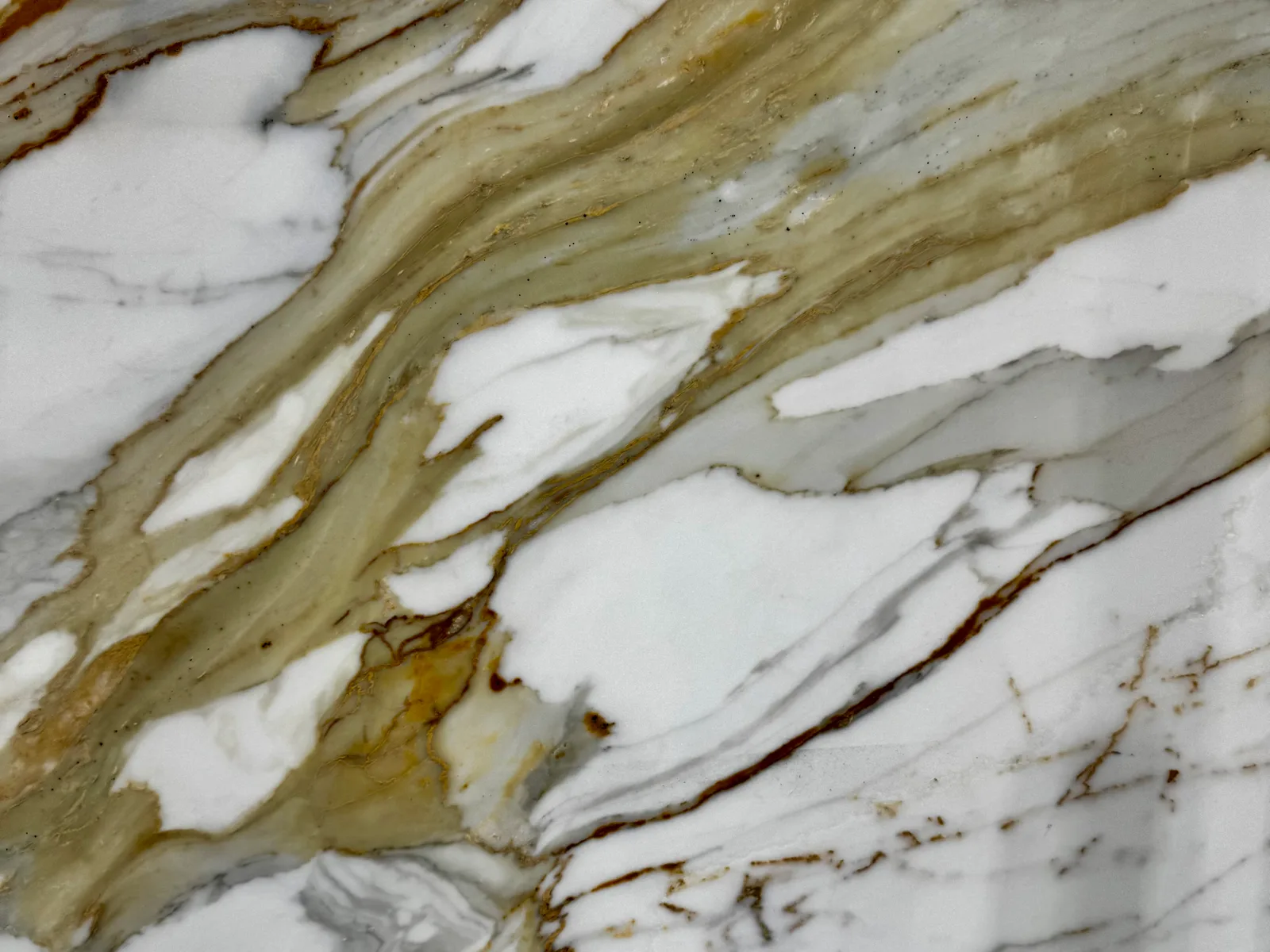
It performs equally well outdoors and in high-traffic flooring, where its resistance to weathering, scratching and acid makes it a genuinely low-fuss long-term choice. Visually, quartzite tends toward white, grey and beige tones with flowing, often subtle veining, though iron-rich varieties can bring through dramatic pinks, reds and golds.
Caring for quartzite
Quartzite is about as forgiving as natural stone gets. Because it's almost entirely quartz, everyday kitchen acids — citrus, wine, vinegar, tomato — simply don't etch it, removing the single biggest day-to-day concern that comes with marble. Most quartzite still benefits from periodic sealing, particularly the more porous varieties, but it's a far less time-sensitive routine than marble's.
Do
- Seal quartzite periodically, especially more porous varieties
- Clean with warm water and a mild, pH-neutral cleaner
- Enjoy the relative freedom from acid worries that marble doesn't offer
- Use trivets for very heavy cookware as routine good practice
Don't
- Assume all "quartzite" sold is genuine — ask your supplier if unsure
- Use harsh abrasive scourers that can dull a polished finish over time
- Mix bleach and ammonia-based cleaning products together
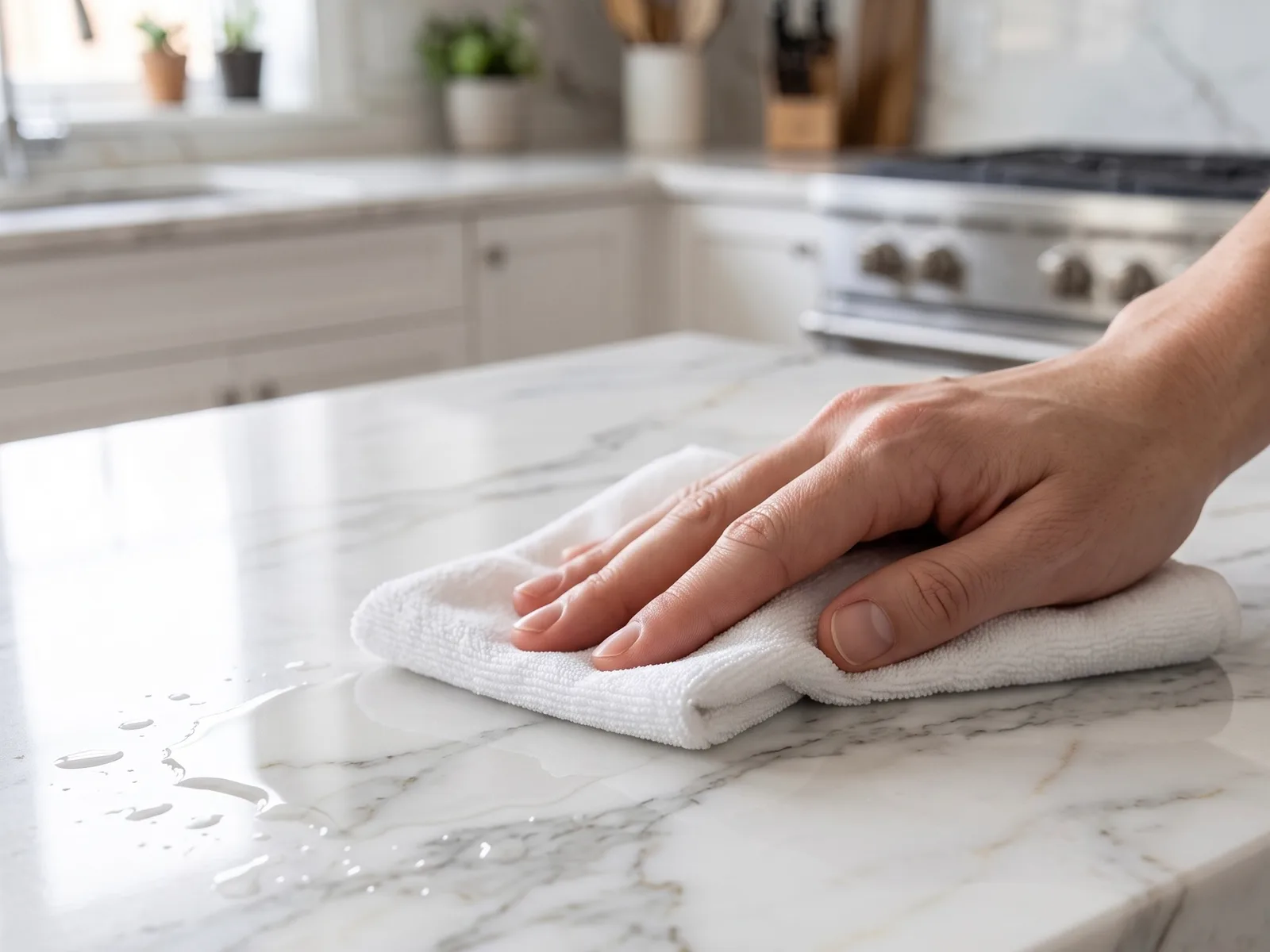
For everyday cleaning, warm water and a soft cloth is usually all quartzite needs. The same diluted methylated spirits mix used across other stones (70% water, 30% methylated spirits, not the dyed kind) works well here too.
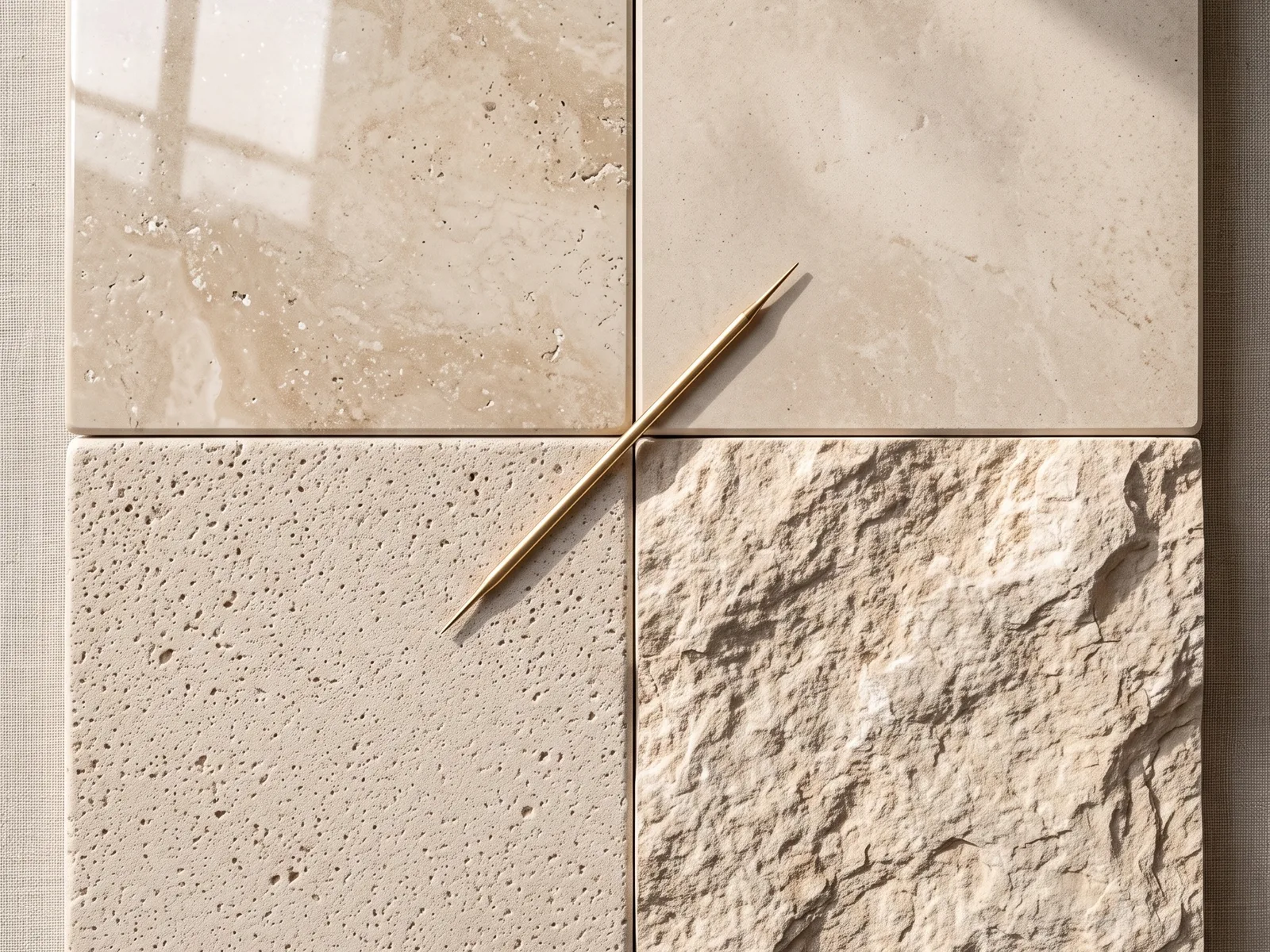
Polished quartzite brings out the depth and movement in its veining most dramatically, while honed and leather finishes offer a softer, more contemporary surface. See our full finishes guide for a side-by-side comparison.
See our current quartzite slabs
From soft, marble-like whites to dramatic iron-rich golds — view live stock, dimensions and inspiration imagery in our online gallery.
Browse Quartzite Stock Visit The Gallery