What is limestone?
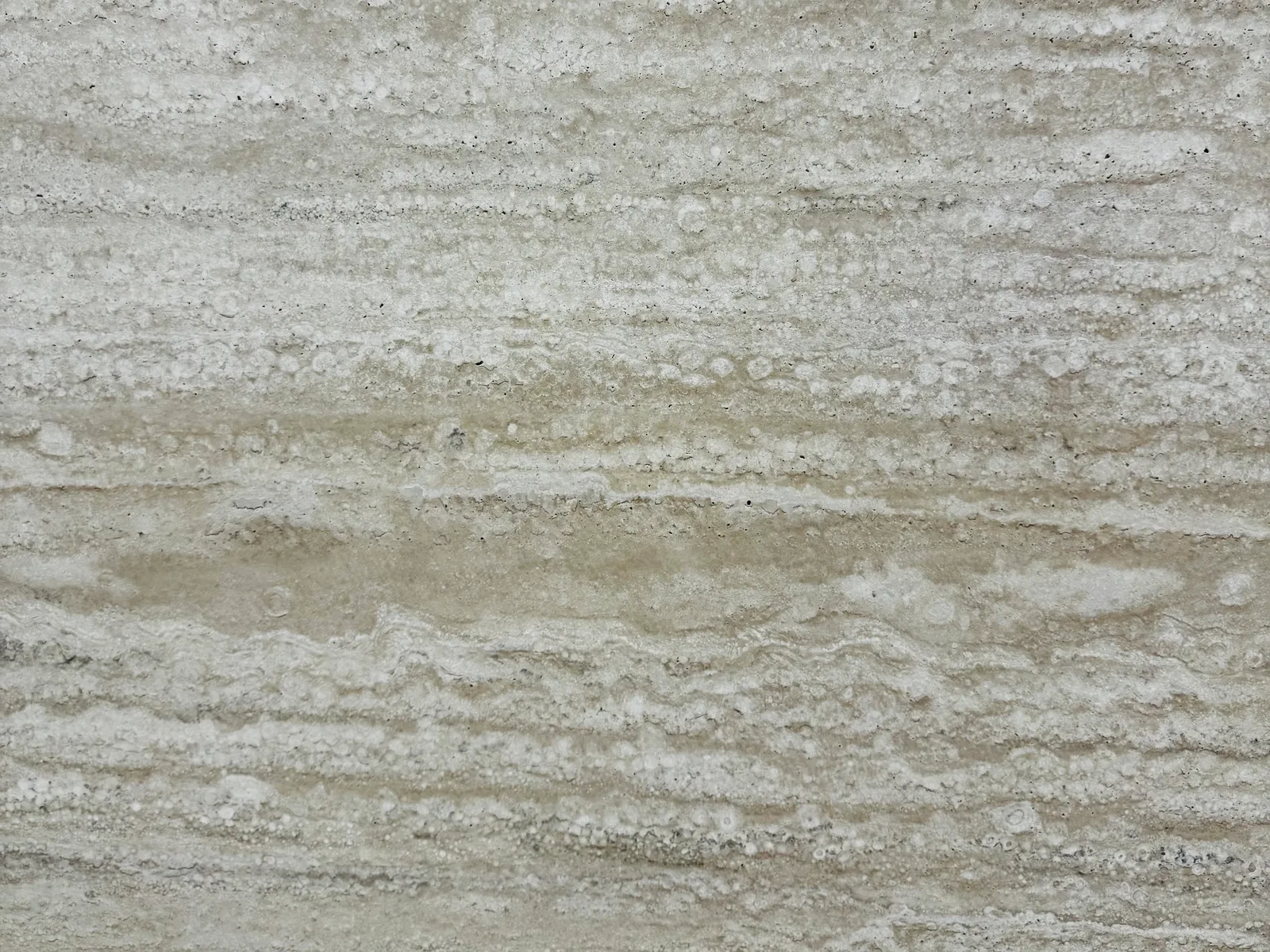
Limestone is a sedimentary rock built almost entirely from the remains of ancient marine life — shell fragments, coral, and other organic debris, compressed and hardened over millions of years into solid stone. It's quite literally a record of an ancient seafloor, which is part of why limestone so often shows subtle fossil fragments and a gentle, organic texture that feels distinctly different from the crystalline sparkle of granite or the dramatic veining of marble.
It's also, geologically speaking, where marble's story begins. Marble is simply limestone that has been transformed by heat and pressure deep underground — meaning every piece of marble was once limestone, before the earth reshaped it into something else entirely. Limestone itself, left in its original sedimentary state, has its own distinct, quieter beauty.
How limestone forms
Limestone typically forms in warm, shallow marine environments, where the shells, coral and skeletal debris of marine organisms accumulate on the seafloor. Over millions of years, the sheer weight of overlying sediment compresses these layers, gradually hardening them into solid rock — formations that can ultimately reach hundreds of metres thick.
Limestone can also form through a different process entirely: the precipitation of calcium carbonate from mineral-rich water, often deep within caves, where water percolating through rock dissolves and later re-deposits calcium carbonate as it moves through the system. Either way, the process plays out across geological time, making every limestone slab a genuine artefact of deep history.
Mineral composition
Limestone is primarily composed of calcium carbonate (CaCO₃) in the form of calcite, often alongside clay, quartz, feldspar and trace minerals depending on its specific formation. Some limestone contains significant dolomite content as well, in which case it's classified as dolomitic limestone — chemically and behaviourally closer to the dolomite stones we cover separately.
That calcite foundation is what gives limestone its characteristic pale colouring and its tendency to react with acids — the same chemistry shared by marble, travertine and dolomite, since all four are fundamentally calcium carbonate stones shaped by different geological histories.
- Rock Type
- Sedimentary
- Relative Hardness
- Softer than granite & quartzite
- Primary Mineral
- Calcite (CaCO₃)
- Density
- ~2.5 – 2.7 g/cm³
- Porosity
- Porous — seal recommended
- Acid Sensitivity
- Etches with acidic spills
Hardness & physical properties
Limestone has been a building material of choice for thousands of years of human architecture — from ancient temples to centuries-old European facades, many of which still stand today. That track record speaks to a genuine, practical durability: limestone resists weathering well and ages with real grace, often developing a soft natural patina that's prized rather than avoided in restoration and heritage projects.
Compared with granite or quartzite, limestone is comparatively softer and more workable — qualities that made it a favoured material for carving and detailed architectural work throughout history, and that still make it a popular choice for homeowners who want a quieter, more tactile natural stone surface today.
"Limestone has been holding up buildings since before recorded history started keeping score. It knows what it's doing."
Where limestone works best
Limestone's understated, organic texture makes it a natural fit for spaces that want warmth and subtlety over high drama — flooring, walls, facades, and bathroom surfaces where a softer, more tactile material suits the room. Its workability also makes it a favourite for detailed architectural elements, from mouldings to feature walls.
Outdoors, limestone has a genuinely long history — many heritage buildings and facades across Europe are limestone, having weathered centuries of exposure. A honed, bush-hammered or sandblasted finish improves slip resistance for exterior paving and courtyards, while still keeping limestone's quiet character intact.
Caring for limestone
Limestone's care routine mirrors marble's closely, since both share the same calcite foundation. Acidic spills — lemon juice, vinegar, wine — can etch the surface if left to sit, so the same simple habit of prompt cleanup does most of the protective work. A penetrating sealer is recommended given limestone's natural porosity, buying valuable time to clean up spills before they have a chance to stain.
Do
- Have limestone professionally sealed with a penetrating sealer
- Wipe up spills in good time, especially anything acidic
- Clean with a pH-neutral stone cleaner or diluted methylated spirits (70/30 with water)
- Reseal once the surface stops beading water
Don't
- Use vinegar, lemon or other acidic cleaners
- Use bathroom, grout or tile cleaners — most aren't pH neutral
- Use abrasive scourers or powders on a polished finish
- Mix bleach and ammonia-based products together
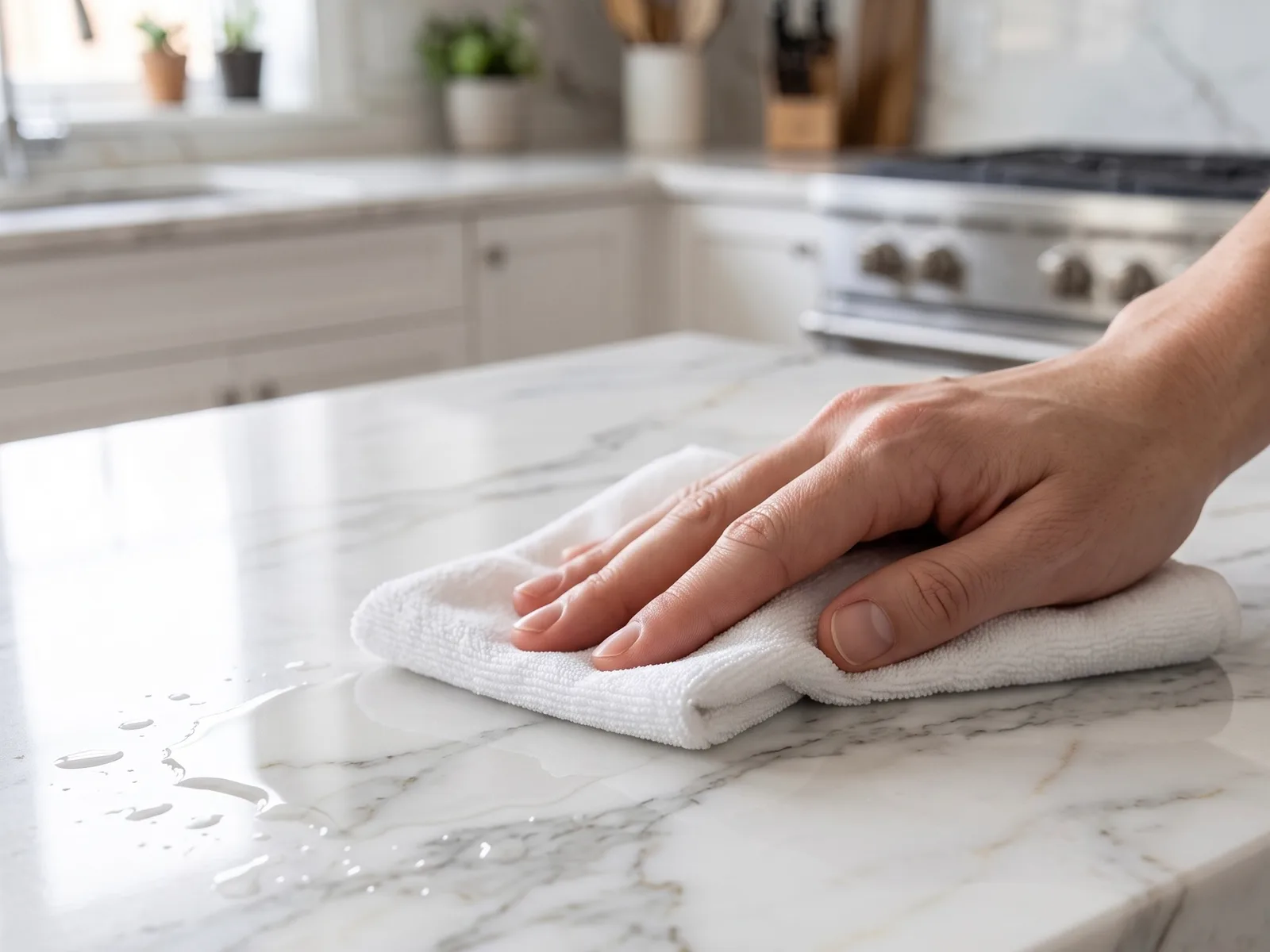
For everyday cleaning, a soft microfibre cloth and water is usually all limestone needs. The same diluted methylated spirits mix used across other stones (70% water, 30% methylated spirits, not the dyed kind) works well here too.
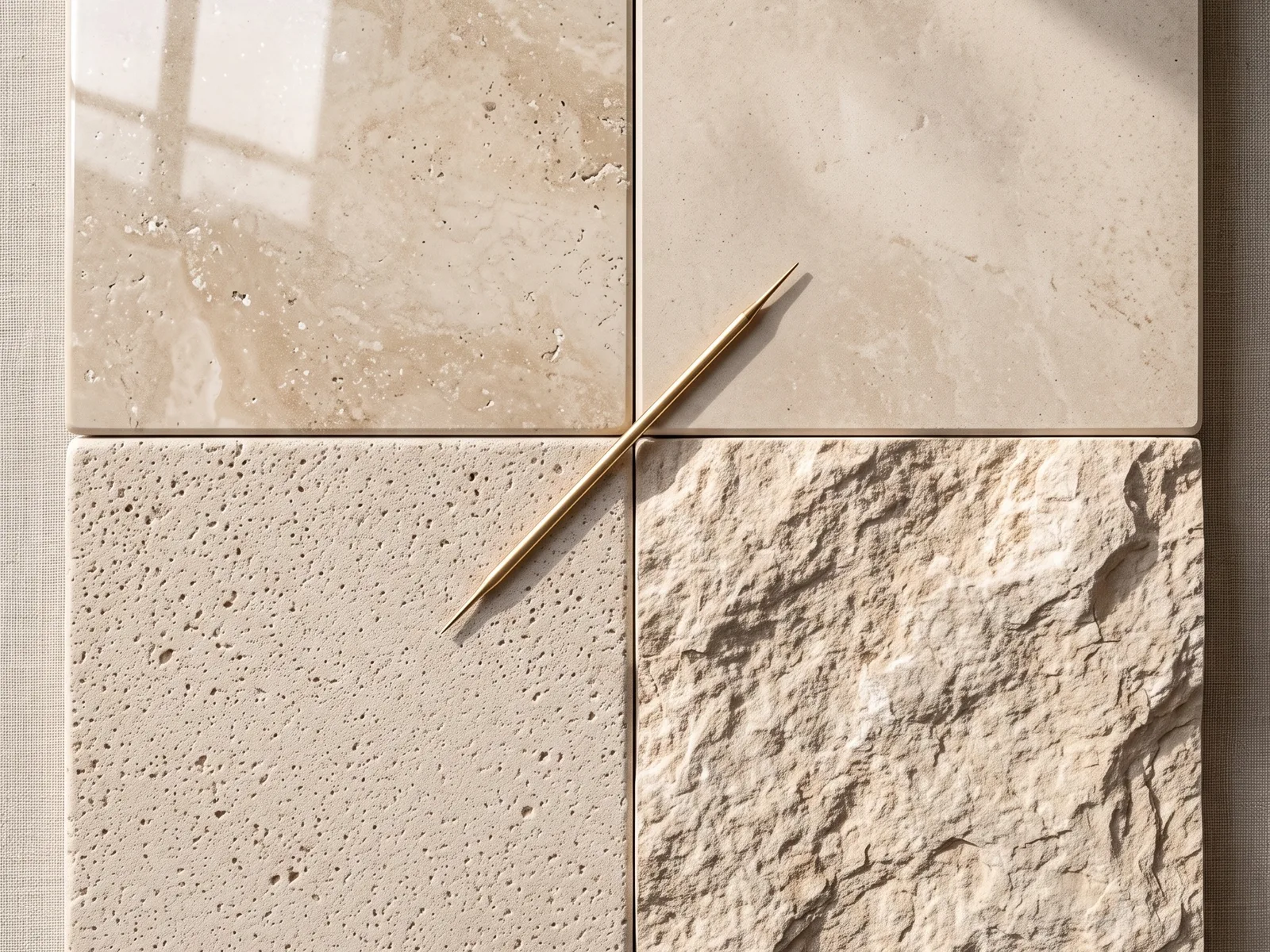
Honed and bush-hammered finishes suit limestone particularly well, keeping its soft, organic character intact while improving slip resistance for floors and outdoor use. See our full finishes guide for a side-by-side comparison.
See our current limestone slabs
From quiet, fossil-flecked neutrals to richer tonal variations — view live stock, dimensions and inspiration imagery in our online gallery.
Browse Limestone Stock Visit The Gallery