What is dolomite?
Dolomite is a sedimentary rock with a quietly fascinating origin story: rather than forming directly, like limestone, or being remade by heat and pressure, like marble, dolomite is the product of a slow chemical exchange. Existing limestone gets infiltrated by magnesium-rich groundwater, which gradually swaps out some of the calcium in the rock for magnesium — converting ordinary calcite into the distinct mineral dolomite.
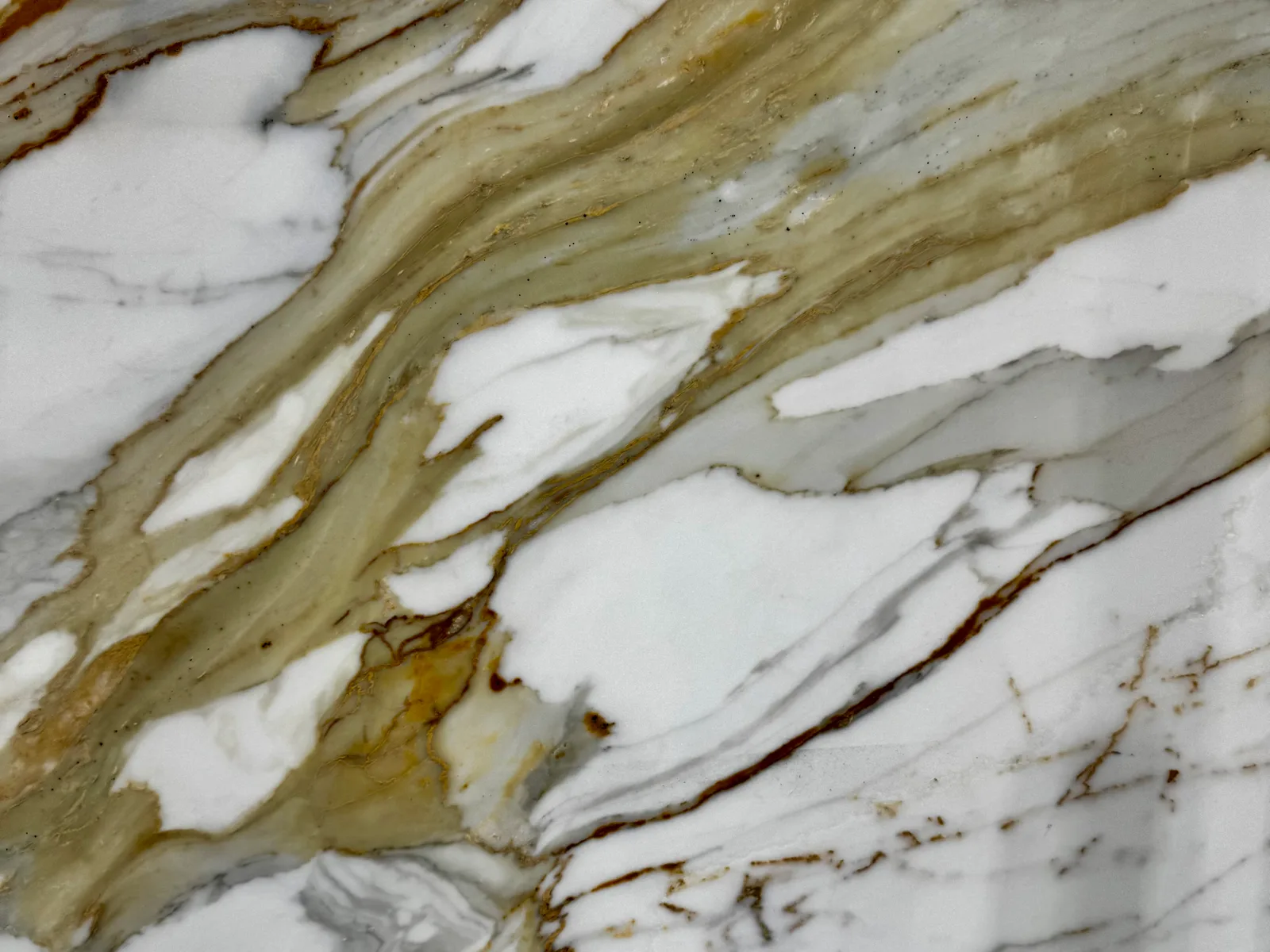
Many stones sold commercially as "marble" — with the same soft, flowing veining and pale background most people picture — are technically dolomite or dolomitic marble rather than pure calcite marble. The visual overlap is real, which is exactly why dolomite has built such a strong following among buyers who love the marble look but want a little more day-to-day forgiveness.
How dolomite forms
Dolomite typically begins life the same way limestone does — in warm, shallow marine environments, where calcium carbonate accumulates from shell and coral debris over millions of years. The difference comes after that initial deposition: magnesium-rich groundwater percolates through the lime mud or limestone, and over time, the available magnesium replaces a portion of the calcium ions in the rock, converting calcite into dolomite.
This process produces a rock that's typically more resistant to weathering and erosion than the limestone it came from, with a finer, more uniform grain that often gives dolomite a smooth, polished appearance even before fabrication. It occurs in massive beds, veins and breccias around the world, and is also a valued industrial source of magnesium.
Mineral composition
Dolomite is composed primarily of the mineral CaMg(CO₃)₂ — calcium magnesium carbonate — closely related to calcite but with a distinct crystal structure that comes from the added magnesium. That structural difference is what gives dolomite its slightly different behaviour compared with pure calcite stones like marble and limestone: it's somewhat less soluble in mild acids, which translates to a touch more resilience day to day.
Dolomite is still, fundamentally, a carbonate stone — closely related to calcite, and like calcite, it remains porous and will react with sustained acid contact. The difference from marble is one of degree, not of complete immunity.
- Rock Type
- Sedimentary
- Relative Hardness
- Slightly harder than marble & limestone
- Primary Mineral
- Dolomite, CaMg(CO₃)₂
- Density
- ~2.8 – 2.9 g/cm³
- Porosity
- Porous — seal recommended
- Acid Sensitivity
- Etches more slowly than marble
Hardness & physical properties
Dolomite sits in a genuinely useful middle ground. It's a touch harder and more weathering-resistant than straight limestone or pure calcite marble, while still offering the same soft, luminous, fine-grained appearance that makes those stones so popular for interiors. That added resilience comes directly from its magnesium content, which forms slightly stronger mineral bonds than calcite alone.
It's still, like marble and limestone, comparatively softer than granite or quartzite — but within that family of calcite-related stones, dolomite is typically the most forgiving of everyday wear.
"Dolomite gives you most of marble's softness in the right ways, and a little less of its softness in the ways that matter for daily use."
Where dolomite works best
Dolomite has become a genuinely popular alternative for kitchen islands and benchtops where clients want the visual character of marble — soft veining, a pale luminous background — without quite the same level of caution marble traditionally demands. It performs equally well in bathroom vanities, flooring and feature walls, anywhere that calls for a quieter, more refined natural stone aesthetic.
Its resistance to weathering also makes dolomite a sound choice for some outdoor applications, though as with all calcite-related stones, a sensible sealing routine goes a long way toward keeping it performing well over time.
Caring for dolomite
Dolomite's care routine closely mirrors marble's, just with a little more breathing room. Acidic spills — lemon juice, vinegar, wine — can still etch dolomite over time, but the reaction happens more slowly than with pure calcite marble, giving you a bit more margin for normal kitchen life before etching becomes visible.
Do
- Have dolomite professionally sealed with a penetrating sealer
- Wipe up spills in good time, especially anything acidic
- Clean with a pH-neutral stone cleaner or diluted methylated spirits (70/30 with water)
- Use coasters and chopping boards as routine good practice
Don't
- Use vinegar, lemon or other acidic cleaners
- Use bathroom, grout or tile cleaners — most aren't pH neutral
- Use abrasive scourers or powders, which dull the polish over time
- Mix bleach and ammonia-based products together
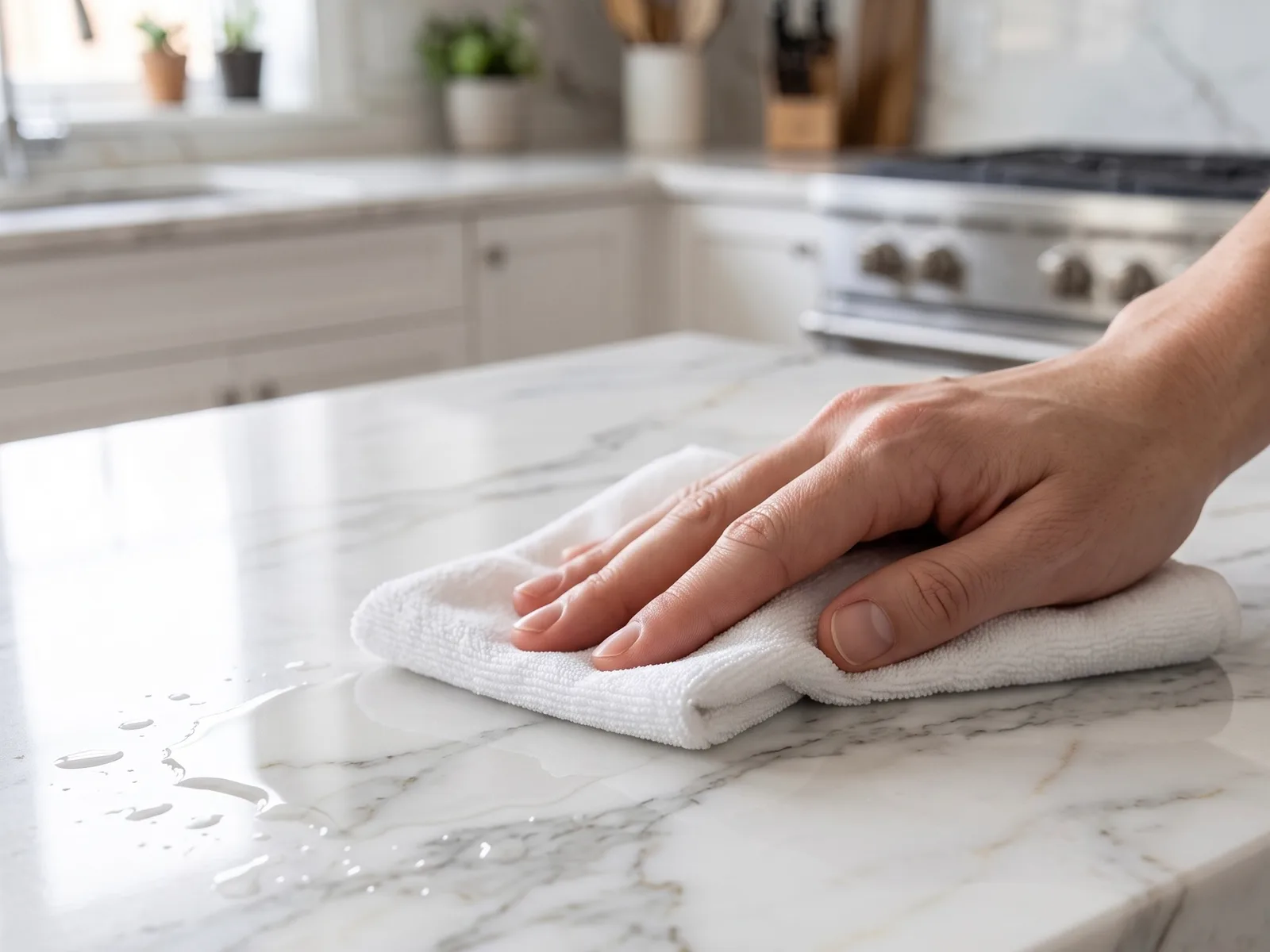
For everyday cleaning, a soft microfibre cloth and water is usually all dolomite needs. The same diluted methylated spirits mix used across other stones (70% water, 30% methylated spirits, not the dyed kind) works well here too — just dry surfaces off afterward to avoid streaking on a polished finish.
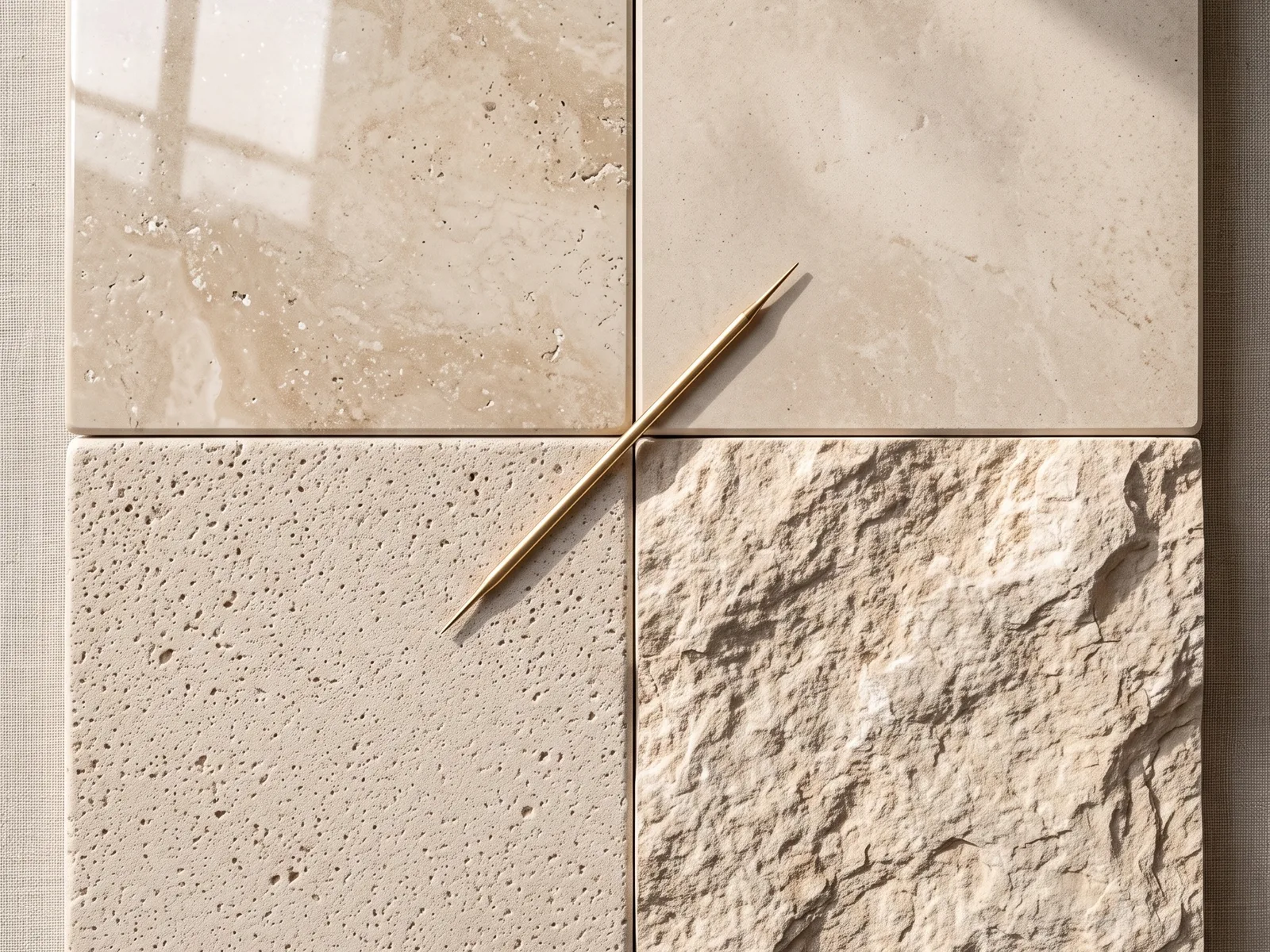
Polished dolomite shows off its luminous, marble-like depth most fully, while a honed finish hides everyday wear more readily — a popular middle-ground choice for busy households. See our full finishes guide for a side-by-side comparison.
See our current dolomite slabs
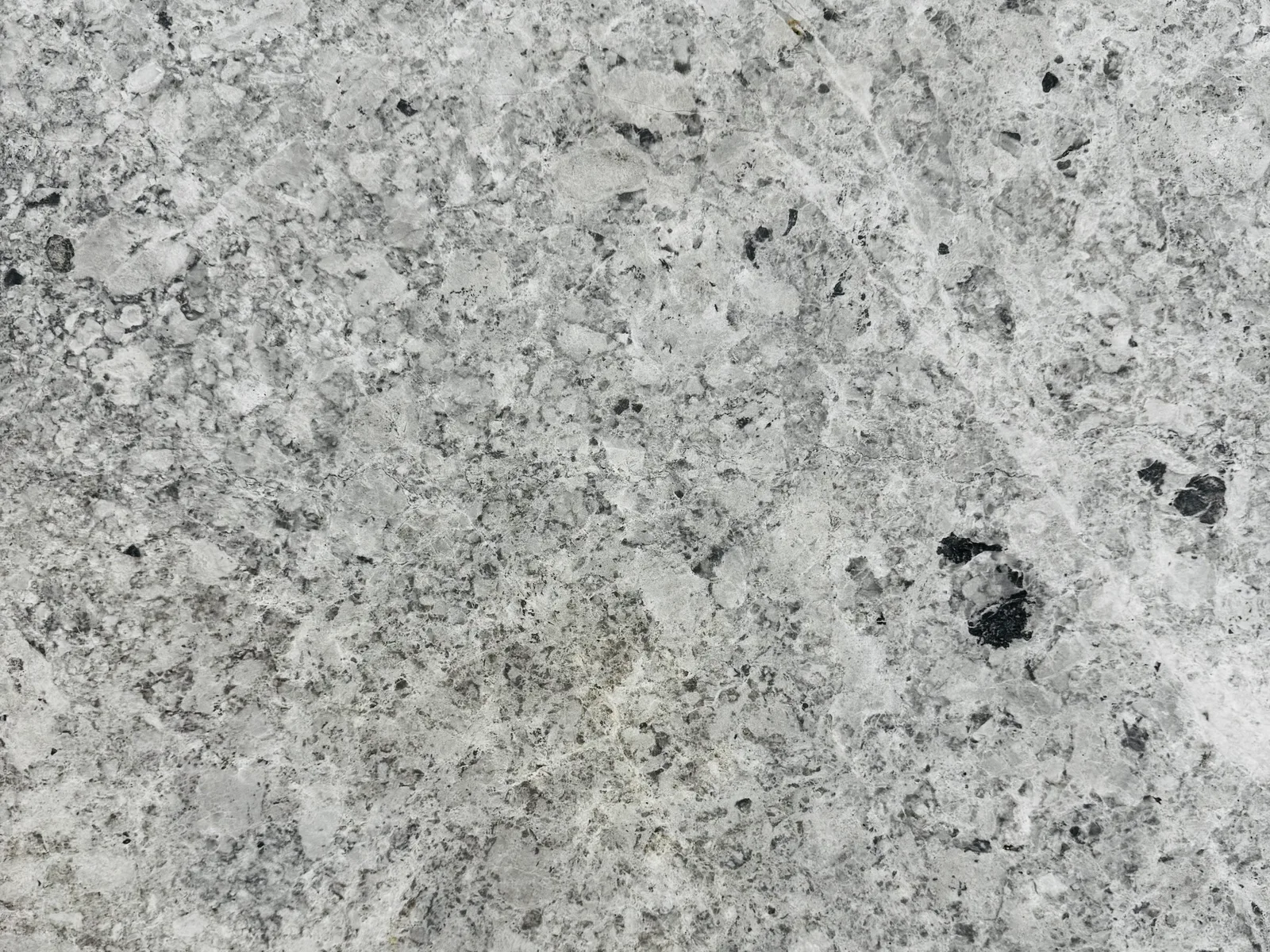
From luminous Super White to dramatic Calacatta Matarazzo — view live stock, dimensions and inspiration imagery in our online gallery.
Browse Dolomite Stock Visit The Gallery