What is marble?
Marble is a metamorphic rock — meaning it began as one type of stone and was transformed into another by intense heat and pressure deep within the earth. Its parent material is limestone, itself formed from compacted layers of ancient shell and coral fragments. Under enough heat and pressure, the calcite in that limestone recrystallises, locking together into the dense, interlocking crystal structure that gives marble its strength, its smooth touch, and — most famously — its veining.
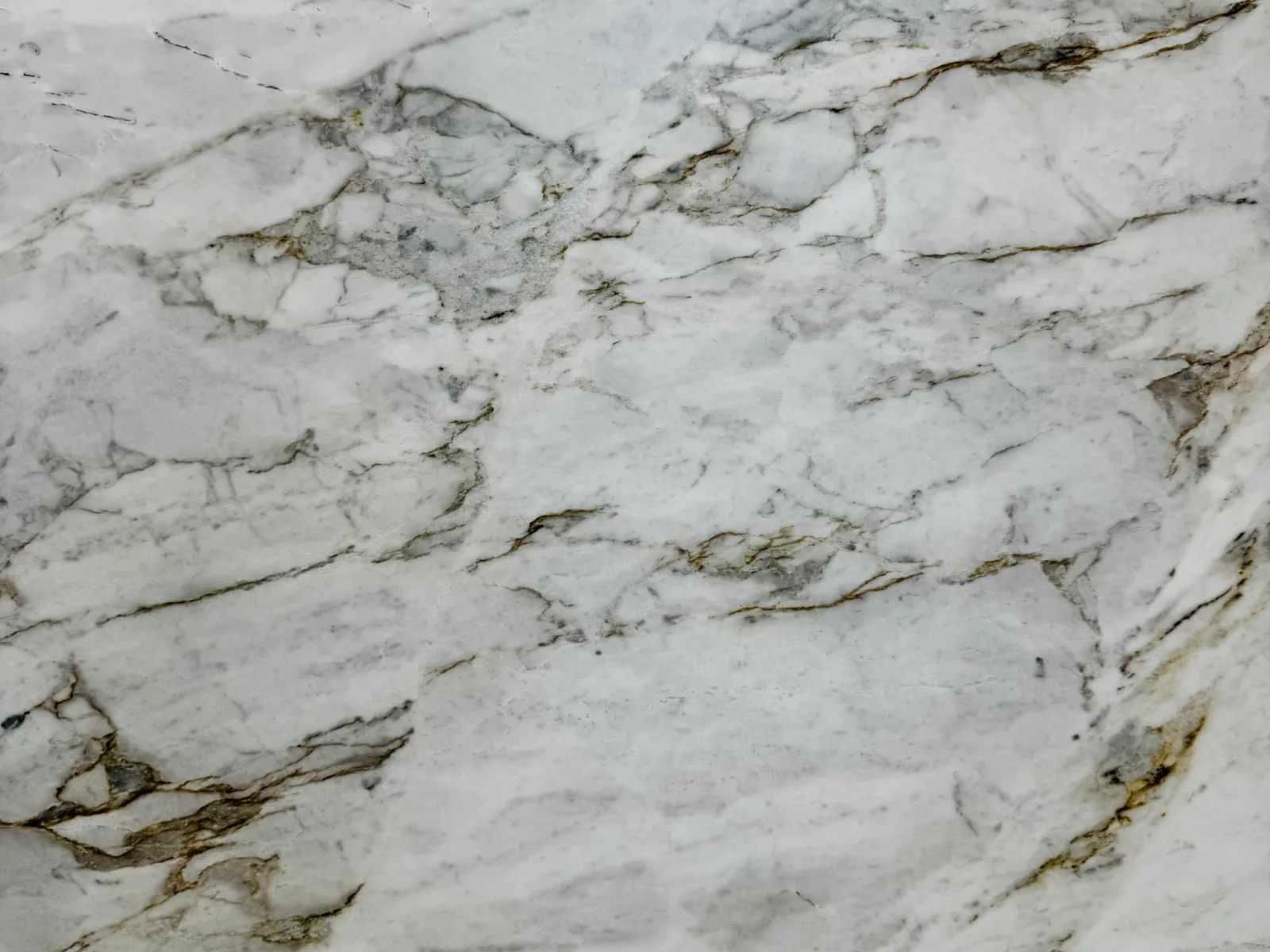
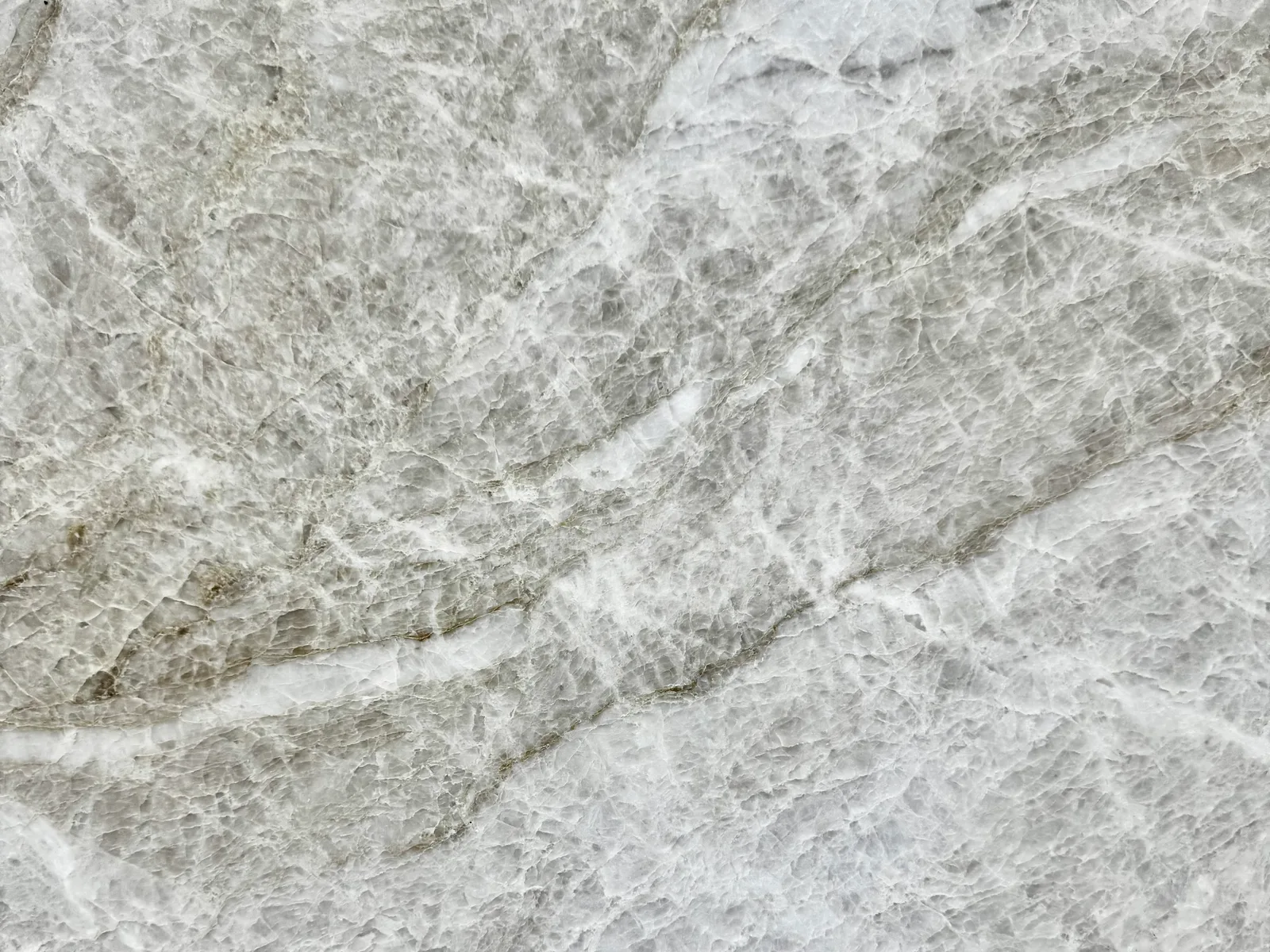
That recrystallisation process erases the original limestone's fossils and sedimentary layering, replacing them with something new: a stone defined by the size and arrangement of its calcite crystals. The longer and more intensely a deposit is metamorphosed, the larger those crystals grow, which is part of why marble from different regions and quarries can look so distinct from one another — Carrara's tight, even white grain versus the bolder, more dramatic veining of a Calacatta.
How marble forms
Marble formation happens deep beneath the earth's surface, where limestone is subjected to the kind of heat and pressure found at tectonic boundaries or beneath mountain ranges. As the rock heats, its calcium carbonate undergoes a chemical transformation, recrystallising into new, harder mineral structures — primarily calcite, sometimes alongside dolomite.
The clay and mineral impurities scattered through the original limestone don't disappear in this process — they transform too, often becoming the micas and silicate minerals responsible for marble's colour variation and veining. In rare cases, the same geological conditions that produce marble can also contribute to the formation of gemstones like ruby and sapphire, a reminder of just how much pressure and time is involved.
Mineral composition
Marble is composed primarily of calcite (CaCO₃), typically alongside smaller amounts of clay, quartz, mica, feldspar, and trace minerals such as pyrite, graphite or garnet. The balance of these minerals — and which ones dominate — is what determines a particular marble's colour and pattern.
Marble that's almost pure calcite tends toward white or pale tones with a fine, even grain. Marble with a higher dolomite content typically runs darker and coarser in texture. Because it's calcite-based, marble is naturally porous and reacts readily with acidic substances — the same chemistry, in fact, that makes pure marble powder useful for neutralising acid in unrelated applications like soil treatment.
- Rock Type
- Metamorphic
- Relative Hardness
- Softer than granite & quartzite
- Primary Mineral
- Calcite (CaCO₃)
- Density
- ~2.5 – 2.7 g/cm³
- Porosity
- Porous — seal recommended
- Acid Sensitivity
- Etches with acidic spills
Hardness & physical properties
Marble has been a flooring and surface material in homes, palaces and public buildings for thousands of years — from Roman bathhouses to today's kitchen islands — and for good reason. It's genuinely durable in the ways that matter day to day: it shrugs off heat from hot pans, holds up to decades of foot traffic, and a well-maintained marble surface will easily outlast the kitchen it's installed in.
Compared with granite or quartzite, marble is a comparatively softer stone — a useful distinction for comparing materials, though it tells only part of the story. In practice, this simply means marble takes a light scratch a little more readily than those harder stones, and benefits from coasters and chopping boards in high-contact areas. That same characteristic is exactly what gives marble its workability — it's why sculptors have favoured it for millennia, and why it polishes to a depth and luminosity that harder stones can't quite replicate.
"Hardness is one property among many. Marble's real track record is measured in centuries, not a single number on a scale."
Where marble works best
Marble has anchored kitchens, bathrooms and grand interiors for centuries, and remains one of the most requested materials for islands, benchtops, vanities, flooring, fireplace surrounds and feature walls. Its combination of visual depth and workability is unmatched by engineered alternatives, which is precisely why it has endured as a first-choice kitchen material for so long.
Many of our clients choose marble specifically because of its character — the veining and the gentle patina that develops over years of use are part of the appeal, not something to be designed around. For a kitchen that sees heavy daily use, a honed or leather finish is a popular choice, since it shows everyday wear far less than a high polish while keeping all of marble's natural beauty.
Caring for marble
The one characteristic worth understanding before you choose marble is etching — a reaction between its calcite content and acidic substances like lemon juice, vinegar, tomato, and wine. Etching shows up as a dull, slightly rough patch where the polish has been chemically softened. It's easy to avoid with basic care, and many homeowners simply consider it part of marble's lived-in character rather than damage to correct. Where it does bother you, a light professional re-polish brings the surface straight back, and etching is far less noticeable on a honed or leather finish than on a high polish in the first place.
Do
- Have marble professionally sealed with a penetrating sealer
- Wipe up spills immediately, especially anything acidic
- Clean with a pH-neutral stone cleaner or diluted methylated spirits (70/30 with water)
- Use coasters, trivets and chopping boards to prevent direct contact
- Reseal once the surface stops beading water
Don't
- Use vinegar, lemon or other acidic cleaners
- Use bathroom, grout or tile cleaners — most aren't pH neutral
- Use abrasive scourers or powders, which dull the polish over time
- Leave spills, especially wine, citrus or sauces, to sit overnight
- Mix bleach and ammonia-based products — this creates a toxic gas
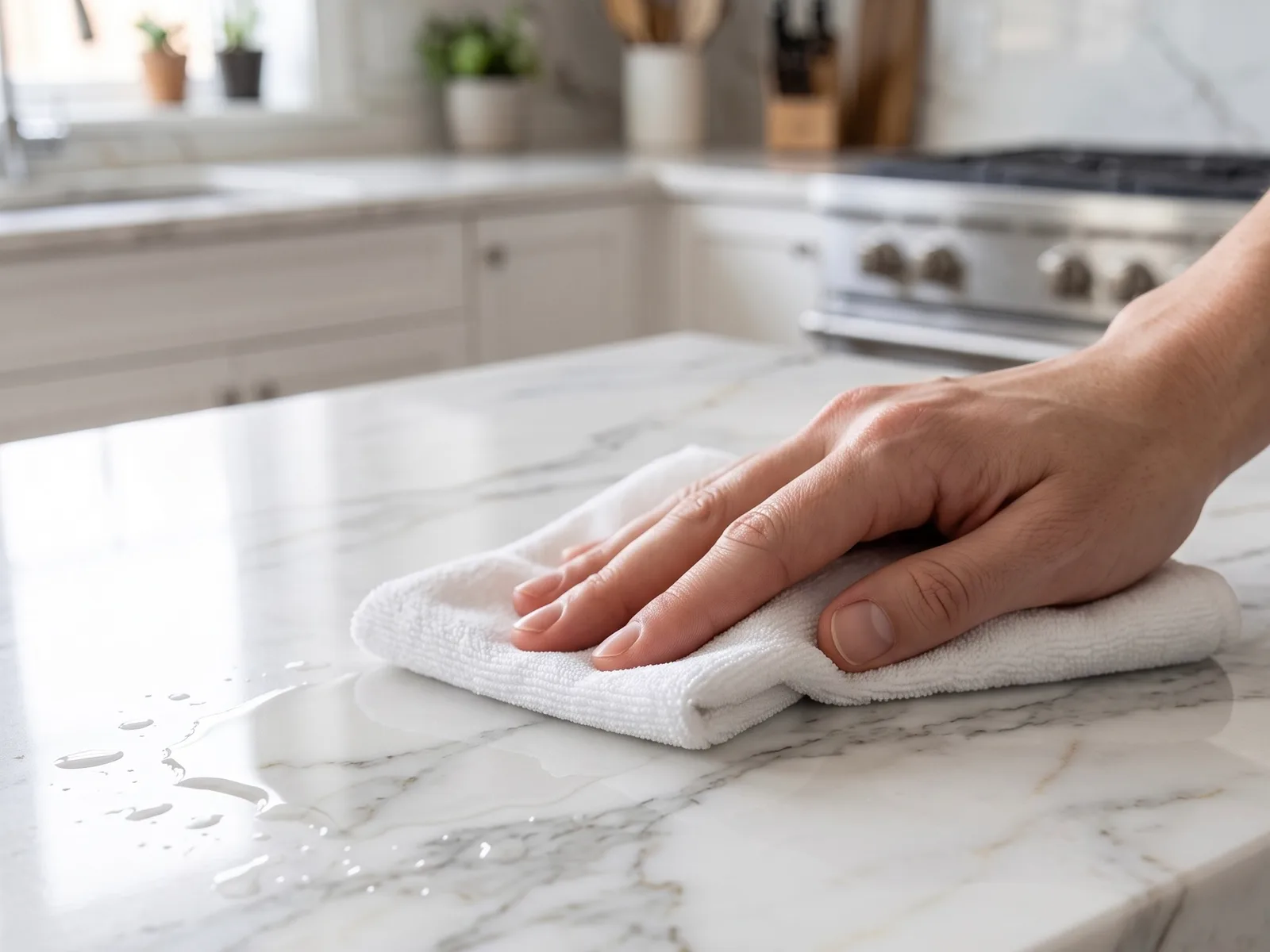
For day-to-day cleaning, a soft microfibre cloth and water is usually all marble needs. A diluted mix of methylated spirits (not the dyed kind) and water in a 70:30 ratio makes an effective, inexpensive everyday cleaner — just make sure surfaces are dried off afterward rather than left to air dry, which can leave streaking on a polished finish.
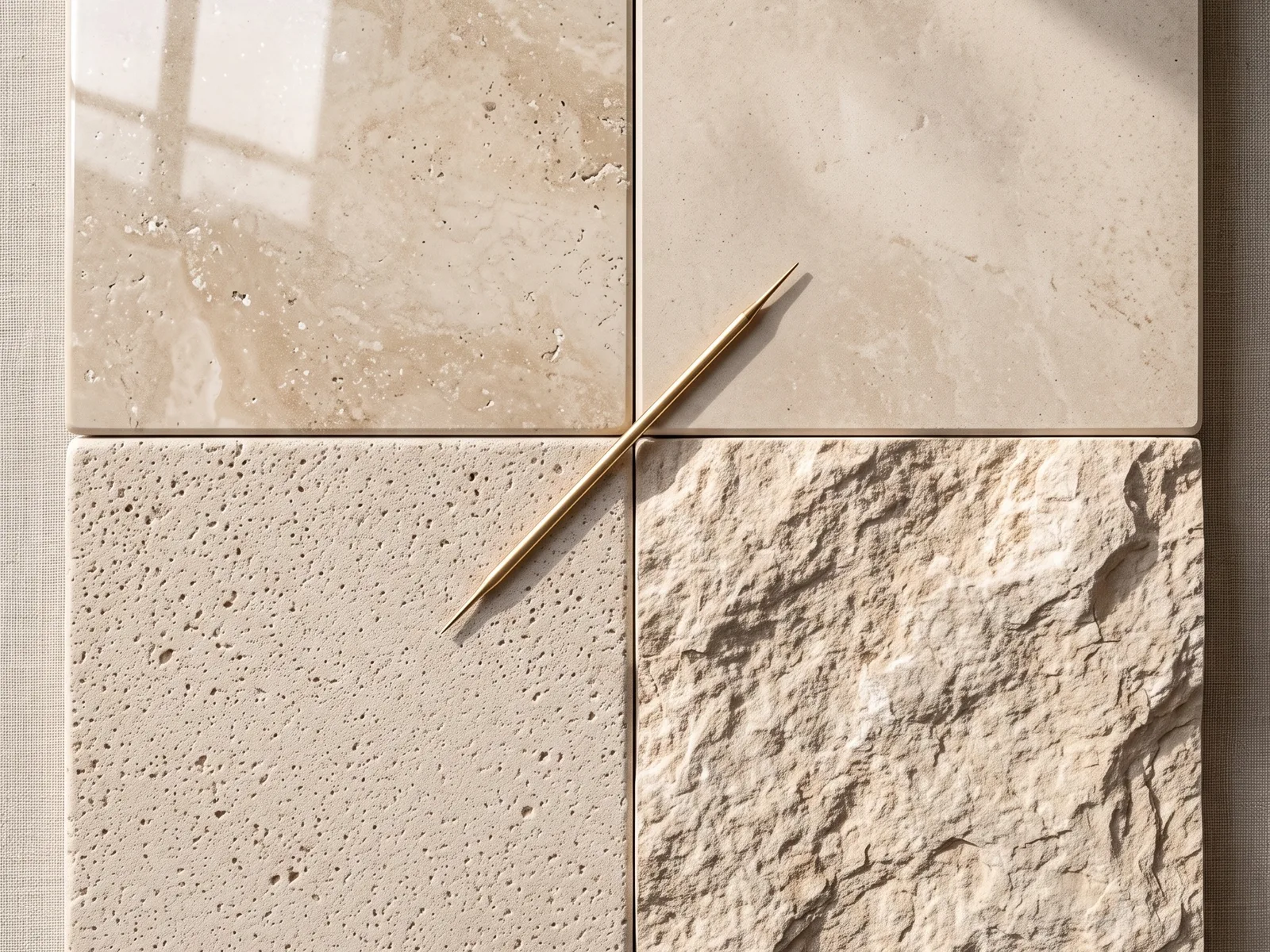
Polished marble shows the deepest colour and reflection, but also shows etching and scratches most readily. Honed marble has a soft, matte surface that hides wear far better — a popular choice for busy kitchens that still want the marble look. See our full finishes guide for a side-by-side comparison.
See our current marble slabs
From classic Carrara to bold Calacatta Viola — view live stock, dimensions and inspiration imagery in our online gallery.
Browse Marble Stock Visit The Gallery