What is granite?
Granite is an igneous rock — born not from pressure and time reshaping an existing stone, but from the earth's own molten interior cooling and crystallising into something solid. Where marble and limestone trace back to ancient seabeds, granite traces back to magma: liquid rock that pushed up through the earth's crust, slowed its rise, and spent thousands to millions of years cooling slowly enough for large, interlocking mineral crystals to form.
That slow cooling is the whole story of granite's character. The longer magma takes to solidify, the larger its mineral grains grow, which is why granite shows that distinctive speckled, crystalline texture rather than the smooth, fine grain of a metamorphic stone like marble. It's also why granite has been a first-choice building and monument material for thousands of years — from ancient Egyptian obelisks to modern bridge facings — valued for a toughness that comes directly from how it was made.
How granite forms
Granite formation begins deep within the earth's mantle, where intense heat melts existing rock into magma. As this molten material slowly works its way up through the crust, it cools — sometimes over millions of years — allowing minerals to crystallise and interlock into the dense structure granite is known for. This can happen in a range of settings: beneath mountain ranges, under ancient volcanoes, or along tectonic plate boundaries, and the exact conditions of each site shape the particular character of the granite that results.
Because each granite deposit cools under its own unique combination of pressure, temperature and mineral chemistry, no two quarries — and often no two blocks from the same quarry — produce identical stone. That variation is part of what makes granite collecting and selecting genuinely engaging: each slab is a one-off record of a specific moment in the earth's geological history.
Mineral composition
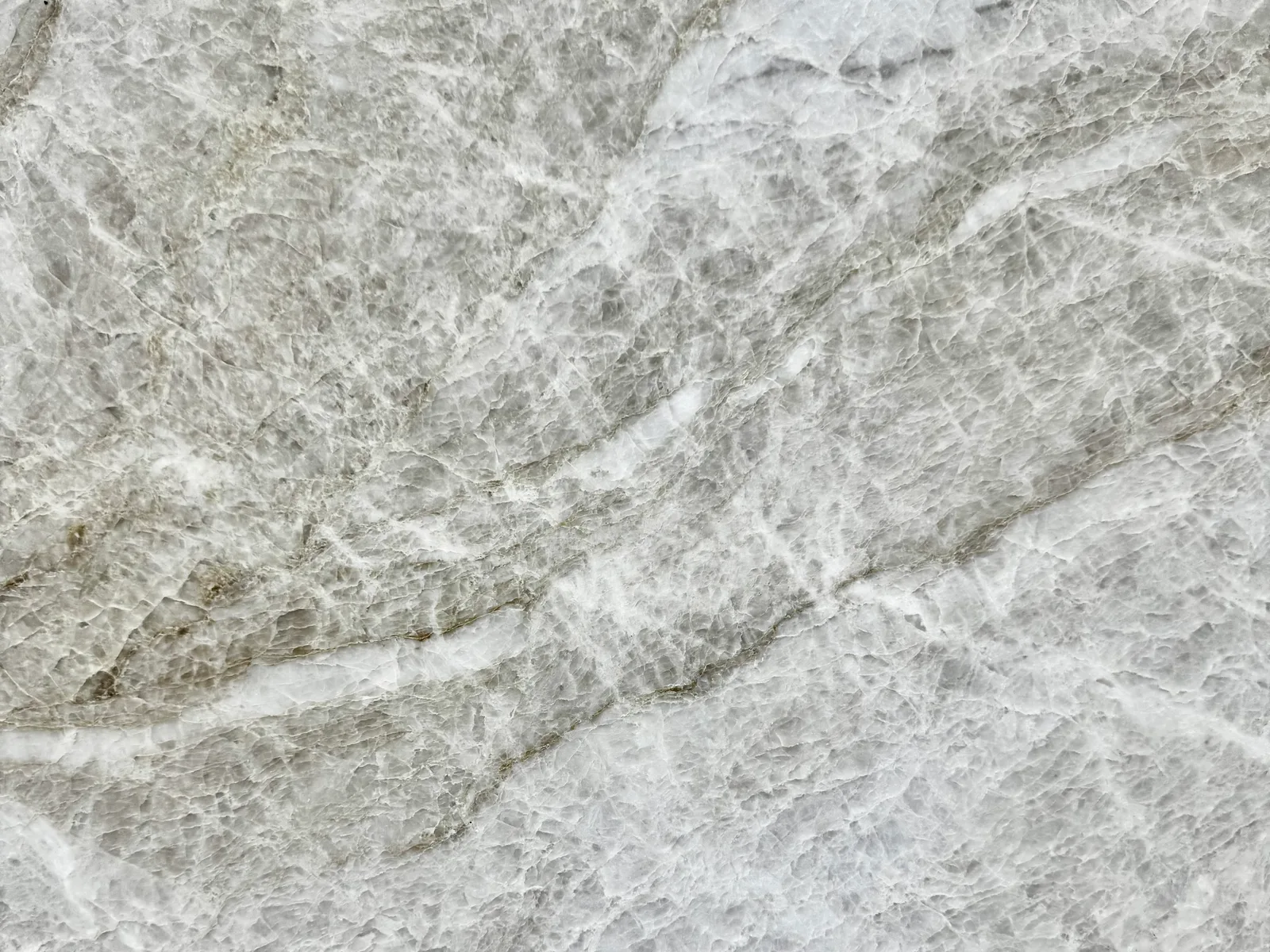
Granite is typically composed of roughly 40–60% feldspar, 20–40% quartz, and 5–10% mica, along with smaller traces of minerals such as amphibole, zircon and magnetite. This blend is what gives granite its characteristic speckled look — the interplay of light feldspar, glassy quartz and dark mica flecks creates the depth and texture that's instantly recognisable across countless granite varieties.
Critically, granite contains very little calcite — the mineral responsible for marble's reactivity with acids. That absence is a major part of why granite has earned its reputation as a low-fuss, high-performance surface: it's generally non-reactive with the acidic substances that cause etching in calcite-rich stones.
- Rock Type
- Igneous
- Relative Hardness
- Harder than marble, dolomite & limestone
- Primary Minerals
- Feldspar, Quartz, Mica
- Density
- ~2.75 g/cm³
- Porosity
- Low — light sealing recommended
- Acid Sensitivity
- Chemically inert to most acids
Hardness & physical properties
Granite has earned its reputation the hard way — quite literally. It's one of the toughest natural stones commonly used in construction and design, prized for thousands of years in everything from bridges and monuments to kitchen benchtops. That toughness comes directly from its quartz and feldspar content, two of the hardest common rock-forming minerals, locked together into a dense, interlocking structure.
Compared with marble, limestone, travertine and dolomite, granite sits noticeably harder and more scratch-resistant — broadly in the same territory as engineered quartz surfaces. It also conducts heat well, meaning hot pots and pans straight off the stove are rarely a concern, and it stands up to decades of heavy daily use without losing its finish.
"Granite doesn't ask much of you. It was built by fire and pressure to last — your kitchen is comparatively gentle."
Where granite works best
Granite has long been the default choice for kitchens that see serious daily use — chopping, hot pans, acidic ingredients, heavy cookware — precisely because it shrugs off all of it with minimal fuss. It performs just as well outdoors, where its resistance to weathering and erosion makes it a natural fit for paving, outdoor kitchens, and facades exposed to Melbourne's full range of weather.
Beyond the kitchen, granite is a strong choice for any high-traffic surface — bathroom vanities, flooring, stairs, and feature walls all benefit from its durability. Its wide range of natural colour and pattern, from quiet greys to dramatic blacks and blues, means there's genuine variety within a material that never compromises on toughness.
Caring for granite
Granite's biggest advantage is just how little it asks of you. Because it's largely free of calcite, everyday acidic spills — citrus, wine, tomato, vinegar — don't etch the surface the way they would on marble or limestone. A light penetrating sealer is still worthwhile, since granite isn't entirely non-porous, but resealing is needed far less often than with softer, more porous stones.
Do
- Have granite sealed with a penetrating sealer, even though it needs it rarely
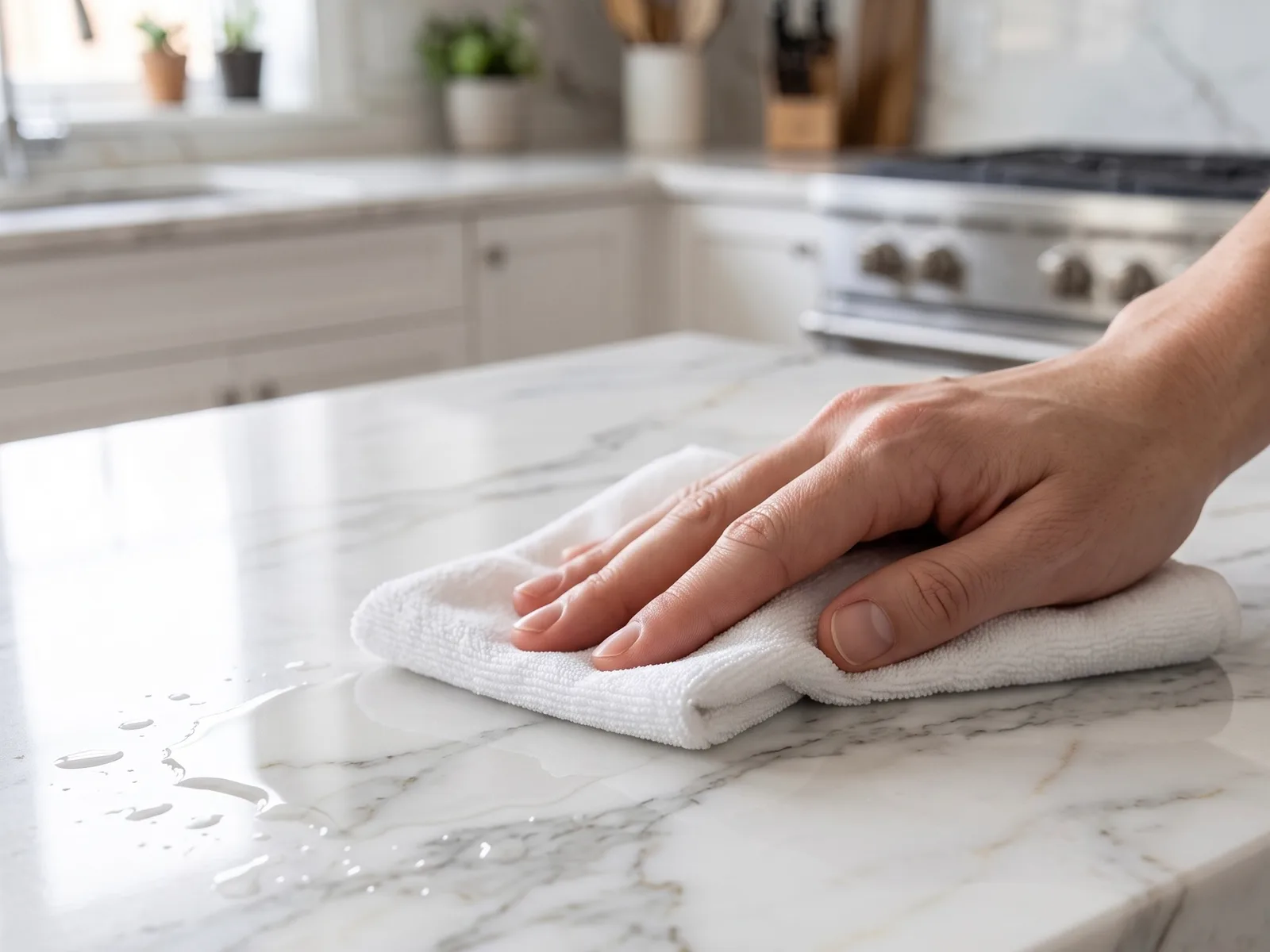
- Clean with warm water and a mild, pH-neutral cleaner
- Wipe up spills in normal time — granite isn't on a clock the way marble is
- Use trivets for very heavy or very hot cookware as routine good practice
Don't
- Use harsh abrasive powders that can dull a polished finish over time
- Assume "granite" means zero maintenance — light sealing still extends its life
- Drag heavy cookware across the surface, which can scratch even a hard stone
- Mix bleach and ammonia-based cleaning products together
For everyday cleaning, warm water with a soft cloth is usually all granite needs. The same diluted methylated spirits mix used across other stones (70% water, 30% methylated spirits, not the dyed kind) works well here too, and dries without streaking when wiped off promptly.
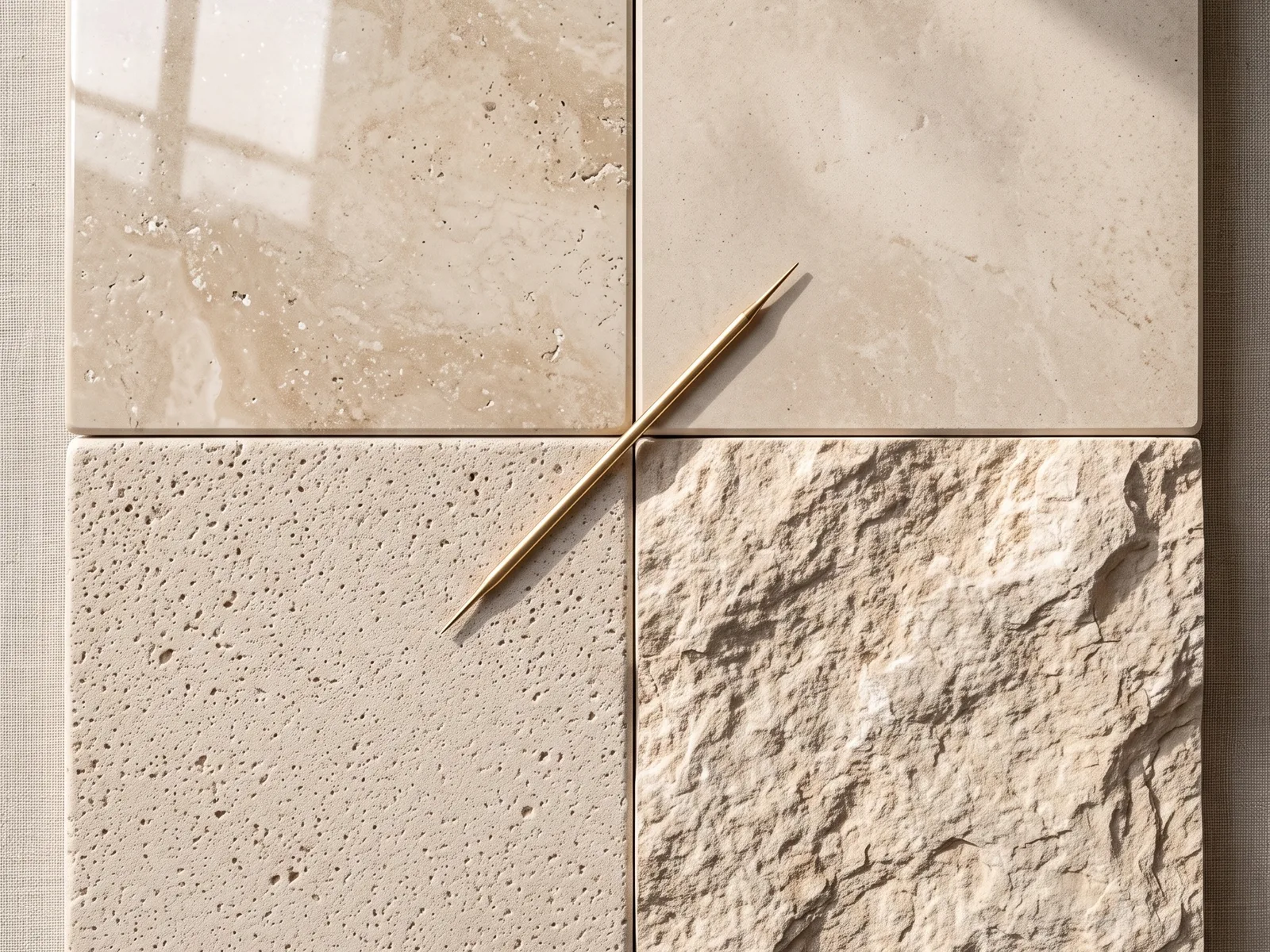
Polished granite is by far the most common finish, prized for the way it deepens colour and brings out the crystalline sparkle of quartz and feldspar. Honed and leather finishes are also available for a more matte, contemporary look — see our full finishes guide for a side-by-side comparison.
See our current granite slabs
From classic speckled greys to dramatic blacks and blues — view live stock, dimensions and inspiration imagery in our online gallery.
Browse Granite Stock Visit The Gallery