What is travertine?
Travertine is a form of limestone with one of the most distinctive textures in natural stone — a softly pitted, almost organic surface that comes directly from how it forms. Rather than accumulating slowly from shell and coral debris like ordinary limestone, travertine is deposited rapidly by mineral-rich water, most often at the mouth of a hot spring or within a limestone cave.
That formation story is also a deeply human one. Travertine has been quarried and built with since Roman times — the Colosseum itself is largely travertine — and that same warm, textured character has made it a constant in architecture and interior design ever since, from ancient amphitheatres to contemporary courtyards.
How travertine forms
Travertine formation begins when calcium-rich water moves through rock and soil, dissolving calcium carbonate along the way. As that water reaches the surface — typically at a hot spring, geyser, or within a limestone cave — it cools, and the dissolved minerals precipitate back out, building up in layers over time. Gas bubbles trapped in the water during this process are what create travertine's signature small pits and holes as they escape.
The exact colour and texture of a given travertine depends on the mineral content of its water source and the specific conditions during formation — which is why travertine ranges so widely, from pale creams through warm golds to deeper rust and brown tones.
Mineral composition
Travertine is, like ordinary limestone, primarily composed of calcite (CaCO₃), often alongside clay minerals, quartz, feldspar and iron oxides — the iron content in particular is responsible for travertine's warmer beige, gold and rust tones. Being calcite-based, travertine shares limestone and marble's porous, somewhat acid-reactive nature.
- Rock Type
- Sedimentary
- Relative Hardness
- Softer than granite & quartzite
- Primary Mineral
- Calcite (CaCO₃)
- Density
- Lighter than most natural stone
- Porosity
- Porous — seal recommended
- Acid Sensitivity
- Etches with acidic spills
Hardness & physical properties
Travertine has proven its durability the way few materials can — by surviving in continuous use for over two thousand years. It handles moisture, heat, and decades of foot traffic with ease, which is exactly why it remains one of the most popular flooring materials for both indoor and outdoor spaces today.
Like other calcite-based stones, travertine is comparatively lighter and softer than granite or quartzite, which simply means it takes wear a little differently — its naturally textured surface tends to show character rather than obvious scratching, which is part of why so many homeowners embrace its lived-in, ageing beauty rather than fighting it.
"Travertine doesn't hide its history. Two thousand years of architecture have proven that's exactly the point."
Where travertine works best
Travertine has earned its enduring popularity in flooring above almost any other application — its naturally textured surface offers excellent slip resistance, making it a genuine favourite for bathrooms, pool surrounds, courtyards and alfresco entertaining areas. That same texture and warmth also suits feature walls and fireplace surrounds beautifully.
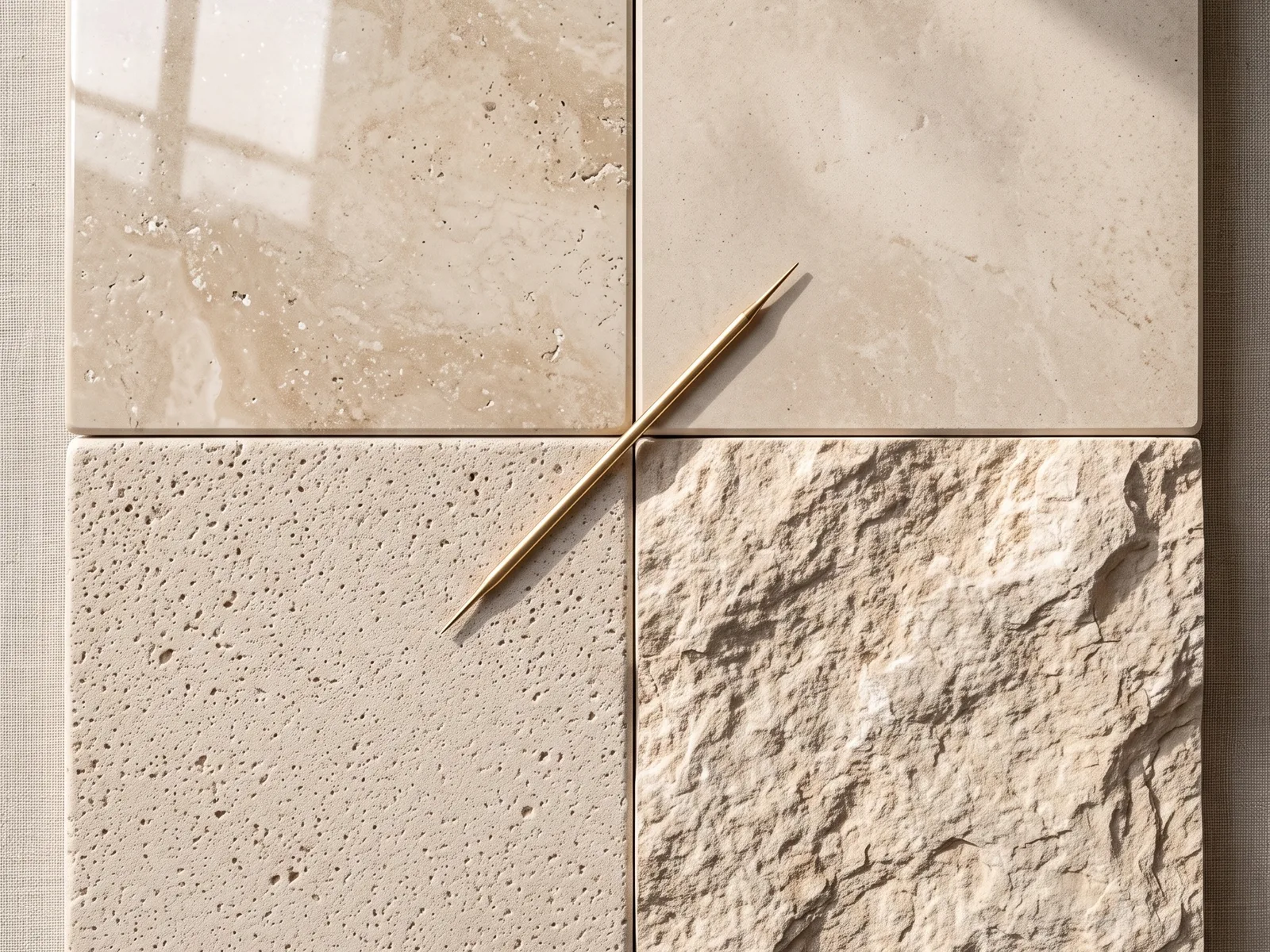
Travertine is typically supplied in two forms: filled, where the natural holes are smoothed level with a resin or cement fill for an even, easy-to-clean surface, and unfilled, which keeps the full rustic, tactile texture on display. Both are popular — the choice comes down to whether you want travertine's character softened for practicality or celebrated in full.
Caring for travertine
Travertine's care routine follows the same principles as marble and limestone, since all three share a calcite base. Acidic spills — lemon juice, vinegar, wine — can etch the surface if left to sit, so prompt cleanup is the simple habit that does most of the work. Because travertine is naturally porous, unfilled varieties in particular benefit from a proper sealing routine to keep moisture and dirt from settling into the open pits.
Do
- Have travertine professionally sealed, especially if unfilled
- Wipe up spills in good time, especially anything acidic
- Clean with a pH-neutral stone cleaner or diluted methylated spirits (70/30 with water)
- Reseal once the surface stops beading water
Don't
- Use vinegar, lemon or other acidic cleaners
- Use bathroom, grout or tile cleaners — most aren't pH neutral
- Use abrasive scourers or powders on a polished finish
- Mix bleach and ammonia-based products together
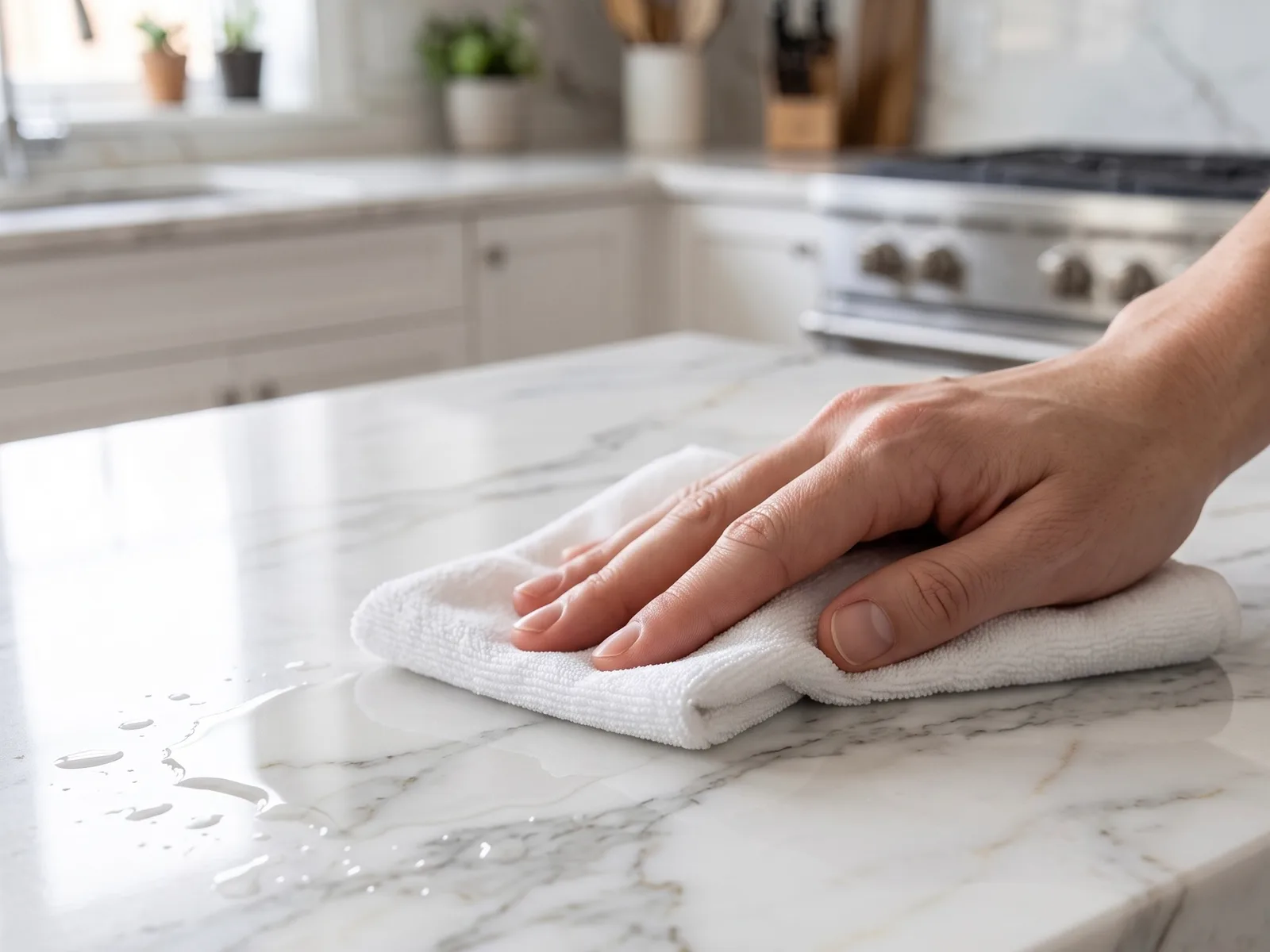
For everyday cleaning, a soft microfibre cloth and water is usually all travertine needs. The same diluted methylated spirits mix used across other stones (70% water, 30% methylated spirits, not the dyed kind) works well here too.
Travertine is commonly supplied honed or tumbled for a soft, matte, slip-resistant surface — ideal for flooring and outdoor use — though a polished finish is also available where a smoother, more reflective look is preferred. See our full finishes guide for a side-by-side comparison.
See our current travertine slabs
From classic Romano to warmer golden tones — view live stock, dimensions and inspiration imagery in our online gallery.
Browse Travertine Stock Visit The Gallery